Unrestricted Warfare Theory And Meaning.


Unrestricted Warfare was published in February 1999  by two Chinese People's Liberation Army (PLA) Air Force colonels, Qiao Liang and Wang Xiangsui. 


The book became a best-seller in China, and it was extensively read at the PLA's and Chinese Communist Party's highest levels. 

 The book, on the other hand, was regarded with anxiety in the United States. 


"Unrestricted Warfare" implies that any method can be prepared for use, that information is everywhere, that the battlefield is everywhere, that any technology can be combined with any other technology, and that the lines between war and non-war, as well as between military and non-military affairs, have been systematically blurred.


'You need to read Unrestricted Warfare because it shows China's game plan in its approaching conflict with America,' said Admiral Thomas Moorer, former chairman of the Joint Chiefs of Staff. 


  • China believes that by using these measures, it would be able to destroy America.'  
  • Qiao and Wang's book, as originally interpreted by US scholars and military strategists, promoted an immoral and potentially illegal transformation of warfare in which the international system and international law "will be... required to be overthrown in order for the Chinese to achieve their desired policies."  
  • This view, however, is based on a misinterpretation of the book's title rather than the overall philosophy, since the notion of unfettered warfare has subsequently sparked healthy discussion in US military circles.  


Indeed, the book's original title may have been too literally translated; a less incendiary option would be 'warfare beyond borders,' and a more accurate translation for the notion itself, based on the book's core storyline, would be 'warfare that transcends boundaries.' 


'Thus, we acquire a comprehensive notion, a totally new type of combat dubbed "modified combined conflict that goes beyond limitations,"' say Qiao and Wang.  


Because the term 'transcending bounds' does not carry the negative connotations connected with the concept of 'unrestricted' combat, such a translation may have averted the uproar that the book caused when it was initially released. 


  • This is shown by a line in the book's following section: 'Unlimited exceeding of limitations is difficult to attain.' Any breaking of constraints must be done within specified parameters. 
  • That instance, "moving beyond boundaries" does not imply "no limits," but rather the extension of "limited."  
  • Leaving aside the initial unfavorable reaction to the notion of unlimited warfare, it has now achieved a broader acceptance in the US, not least because, as Hoffman puts it, "a deeper reading of the text exposes a number of valuable and even obvious implications."  


The authors of the book make three contributions to the field of strategy: 


  1.  a constructive observation of war; 
  2.  a comprehensive analysis of the transformation of warfare at the end of the twentieth century, with the Gulf War against Iraq in 1999 serving as a symbol of this transformation; and 
  3.  an intellectual conceptualization of future conflicts in the twenty-first century. 


While the majority of Qiao and Wang's work focuses on the nature of war in the late twentieth century and makes some conceptual predictions for the future, they also make several key observations about the nature of war and its principles, such as "regardless of the form the violence takes, war is war, and a change in the external appearance does not keep any war from abiding by the principles of war." 


The most important concept is the significance of combining —'combining two or more battlefield aspects together' —in order to defeat an opponent. 


Using various examples from Chinese and Western military history, Qiao and Wang arrive at the following conclusion: 


'Regardless of whether the war occurred , 3000 years ago or at the end of the twentieth century, it appears that all victories display one common phenomenon: the winner is the one who combined well.'  


In other words, the capacity of strategists to integrate diverse technologies, conceptions of operations, means, and procedures in a manner that delivers major benefits and enhances current combat to a large degree is one of the most crucial components in achieving success in a conflict. 


In creating this concept of combination, Qiao and Wang rightly point out that not every combination is a potential force multiplier, but also that 'it will be pointless to conduct combination  100 times incompetently without grasping the secret of how to conduct combination.' 


The authors recommend two primary guidelines that contribute to the best combination, based on historical examples: 

  1. the golden section rule (0.618:1 ratio) 
  2. and the side-principle rule (taken from linguistics, where one word modifies another and determines its tendency and features). 

The first rule was inspired by the realm of art, while the second was inspired by Chinese language. 


  • By questioning, "Can you still calmly accept them as accidents if too many mishaps reveal the same phenomena?" 
  • Qiao and Wang effectively establish the applicability of these laws to the phenomenon of war. 
  • Qiao and Wang support a concept based on which the combination should be used in battle in the debate that specifies and fuses these two principles. 


  1. First, they contend that each of the five primary components of war, weapons, means, force, direction, and sphere, must have a dominating element defined. 
  2. Second, the 0.618:1 ratio should be used to establish the connections between the dominant weapons and all weapons, the dominant means and all methods, and the dominant force and all forces.


  • Instead of acting strictly according to the rule, Qiao and Wang claim to have discovered a principle that increases the likelihood of winning a war: 'the key [to victory] is to grasp the essence and apply the principle,' rather than acting strictly according to the rule, because 'correct rules do not guarantee that there will always be victories; the secret to victory is to correctly apply rules.'  
  • 'Whoever [will be] able to mix a tasty and unique cocktail for the future banquet of war will eventually be able to wear the laurels of success on his own head,' say Qiao and Wang, claiming that the principle of combination has played a crucial role in achieving victory since the dawn of human conflict. 

Qiao and Wang conclude that 'a conflict that altered the globe eventually changed war itself' after examining the influence of technical advancement and globalization processes on the character of war.  


  • These two innovations are not only at the heart of the end-of-the-century change of combat, but they are also intricately intertwined, each boosting the influence of the other and therefore speeding up the transformation of war. 
  • Building on their notion of combat success as the capacity to put together winning combinations, According to Qiao and Wang, the second half of the twentieth century saw tremendous demand for more intricate combinations than ever before due to technology integration and globalization. 


According to their theory of unrestrained warfare, the technical and geopolitical circumstances of the twentieth century have produced a scenario in which strategists must generate and deploy 'combinations that transcend frontiers.'  


Qiao and Wang highlight two independent but related processes in terms of technology growth and globalization. 


  • On the one hand, they emphasize the growing importance of information technology by claiming that: [It is pointless for military organizations] to wrack their brains over whether or not information technology will grow strong and unruly today, because it is a synthesis of other technologies, and its first appearance and every step forward are all a process of blending with other technologies, so that it is part of them, and they are part of it, and this is precisely what is happening today.  
  • 'Non-professional warriors and non-state organizations are posing a greater and greater threat to sovereign nations, making these warriors and organizations more and more serious adversaries for every professional army,' Qiao and Wang state when discussing the impact of globalization in this age of information technology. 


According to the notion of unrestrained warfare, these two developments expand the importance of 'non-military' means and tactics of conflict, such as terrorism, cybercrime, and financial manipulations.  


These two observations led Qiao and Wang to develop the strategic concept of 'combinations that transcend boundaries,' based on the claim that modern warfare blurs 'technical, scientific, theoretical, psychological, ethical, traditional, customary, and other sorts of boundaries,' erasing 'the boundary between the battlefield and what is not the battlefield, between what is a weapon and what is not, between soldier and non-combatant, between state and non-sovereign, between state and As a result, the authors suggest four new sorts of combinations that, in their opinion, best characterize contemporary combat. 


1. The first is 'supranational combinations,' which bring together national, international, and non-governmental organizations to "assemble and mix together additional tools to fix the issue in a spectrum greater than the problem itself." 


  • As international organizations (multinational, non-state, commercial, religious, criminal, terror, etc.) increasingly affect modern countries, Qiao and Wang argue that modern conflict has transcended the nation-state boundary, and that there is "no better means for countering such threats than the use of supranational combinations."  


2. The second form of combination is known as "supra-domain combinations," which go beyond the battlefield's realms. 


  • As current information technology and globalization compel 'politics, economics, the military, culture, diplomacy, and religion to overlap,' new types of warfare, including as information warfare, financial warfare, trade warfare, and psychological warfare, have emerged in the sphere of conflict. 


Combinations of these domains of warfare are referred to as "supra-domain combinations," which focus efforts on certain dimensions that are most conducive to achieving a conflict's goals.  


'Supra-means combinations,' or a blend of diverse means within each area of warfare that delivers the best beneficial impact on an enemy, are the third sort of combination.  


  • The final and most essential sort of combination is'superior combinations,' which integrate all stages of conflict into a single campaign. 


Qiao and Wang argue that the line between tactics, operations, strategy, and grand-strategy has blurred in today's wars, which are characterized by "supranational powers" that deploy "supra-means" in "supra-domains."


  •  'Bin Laden used a tactical level method of just two truckloads of explosives and threatened U.S. national interests on a strategic level, whilst the Americans can only achieve the strategic goal of protecting their own safety by carrying out tactical level retaliation against him.'  
  • Qiao and Wang utilize a variety of historical instances to illustrate their theories, but the 1991 Gulf War of  is their major point of reference:  
    • 'When we try to utilize previous conflicts to examine what defines war in the era of technological integration and globalization, only "Desert Storm" comes to mind as a ready-made example.'  


The Gulf Conflict, according to Qiao and Wang, "finished one era and began a new one" because it was the first war to fully transcend the bounds of combat. 


  • There were 'supra-national combinations,' as the US was successful in forming a coalition of over thirty countries, including those that were antagonistic to one another, as well as garnering backing from virtually all UN member countries, as well as international and non-governmental organizations (e.g. the World Bank, the World Trade Organization). 
  • There were 'supra-domain combinations,' such as 'the 42 day military operation of Desert Storm was followed by eight years of military pressure + economic embargo + weapons inspections.'  Different means were used in each of the used domains, resulting in 'supra-means combinations' (e.g. the authors discuss the military and psychological domains in detail).  


While the writers do not present any instances of "superior-tier combinations" from the Gulf War, they are plainly identifiable. 


  • The finest example is the employment of reasonably accurate munitions, which, although tactical in nature, had a strategic influence thanks to information technology and live broadcasting of exploding targets, impacting the eyes and ears of the whole globe. 
  • The authors conclude that "although we are witnessing a relative decline in military violence, we are clearly seeing a rise in political, economic, and technical violence" as they examine geopolitical changes in the second half of the twentieth century.  

In other words, on the battlefields of the late twentieth and early twenty-first centuries, unrestrained warfare is an endeavor to argue for the victory of nontraditional realms of violence (i.e. 'non-military' or 'non-war' activities) over strictly military methods to accomplish desired aims. 


Qiao and Wang suggest eight principles at the conclusion of their book that currently characterize modern warfare and will have a greater impact on the nature of future battles. 


  • The first is a concept known as 'omnidirectionality.' Future wars will be marked by a lack of distinction between what is and is not the battlefield, and will encompass not only traditional military domains (i.e. land, sea, air, etc. ), but also social domains such as politics, economics, culture, and the psyche of the nations involved, according to this principle (as well as neutral nations). 
    • Participants in these wars will be required to: Consider all aspects of 'this particular' war when observing the battlefield or a potential battlefield, designing plans, employing measures, and combining the use of all available war resources, to have a field of vision with no blind spots, a concept free of obstacles, and an orientation free of blind angles when observing the battlefield or a potential battlefield, to have a field of vision with no blind spots, a concept free of obstacles, and an orientation free of blind angles when  

  • The second premise is 'synchrony,' which means that future battles will need operations to be carried out in several domains at the same time. 
  • According to Qiao and Wang, technology integration and globalization will allow for not only more synchronized and simultaneous execution of diverse activities using different methods in different domains, but also more synchronized and simultaneous execution of these combinations. 
  • If goals had to be achieved in stages in the past "through an accumulation of battles and campaigns," they could be accomplished in the future "under conditions of simultaneous occurrence, simultaneous action, and simultaneous completion."  
  • According to Qiao and Wang, the third and fourth criteria that will characterize future conflicts are "limited aims" and "unlimited methods." 
  • The former emphasizes the significance of establishing precise and feasible aims for future battles, as "defining objectives that transcend the permissible bounds of the existing methods would only result in tragic outcomes." 
  • The infinite measures concept is founded on the premise that "to achieve certain specified aims, one may break through limits and choose among alternative ways."  
  • While none of these concepts adds anything new to the nature of warfare, their combination creates the central concept of unconstrained warfare: limited goals attained by infinite means. 

  • The sixth notion is 'asymmetry,' which entails exploiting an opponent's weak points. 
    • Although this principle adds little to the nature of war, Qiao and Wang believe that the shift of warfare from the traditional military domain to non-military domains (i.e. politics, economy, and culture) will increase the role of this principle, giving weaker actors more opportunities and exposing the vulnerabilities of stronger actors.  
    • The sixth concept is 'minimal consumption,' which is based on 'rational categorization of goals and rational resource usage.' 


In future conflicts, Qiao and Wang argue that the expanding number of conceivable goals and the many ways to achieve them would inevitably raise the risk of 'high consumption with poor performance,' and that it will be necessary (more than ever before): 

'To combine the superiorities of various types of battle resources in various types of places to build a totally new kind of combat that achieves the goal while minimizing consumption.'  


  • The seventh principle is 'multidimensional coordination,' which entails the coordination and collaboration of all necessary means and actions in all necessary domains in order to achieve the war's goal. 

    • Because unrestricted warfare assumes that any domain, not just the military, can be a battlefield, future war participants should be "inclined to understand multidimensional coordination as the coordination of the military dimension with various other dimensions in the pursuit of a specific objective."  
    • According to Qiao and Wang, the ultimate premise of future battles is "correction and control of the whole process." 
    • 'The ability of these factors to cloud the issues of war, and their intense influence on war, means that loss of control over any one link may be like the proverbial loss of a horseshoe nail that led to the loss of a whole war.'  

  • Finally, it is critical to concentrate on three key components of this theory. 


    • The first and most significant is the notion that human conflict extends beyond the conventional military domain, entering other areas of human interaction (such as politics, economics, and culture) at the subnational, national, and supranational levels. 
    • As a result, Qiao and Wang believe that "he who wishes to win today's war, or tomorrow's war, must "combine" all of the war resources [military and non-military] at his disposal and employ them as means of prosecuting war."  


The writers acknowledge that their concept of 'combination' isn't particularly novel, claiming that "Alexander the Great and the martial monarchs of the Zhou Dynasty never heard of cocktails [i.e. combinations], but they grasped the importance of the combined use of things."  

However, the key point is that in present and future battles, this ancient strategy of combining actions, means, and tactics that were not previously considered aspects of combat will be utilized. 


This leads straight to the third fundamental point advanced by unrestrained warfare: 

the technical and societal developments at the end of the twentieth century were the two primary forces behind the emergence of this "Warfare that Transcends Boundaries" (i.e. globalization). 


In response to these changes, the new principle of war is "using all means, including armed force or non-military force, military and non-military, and lethal and non-lethal means to compel the enemy to accept one's interests," rather than "using armed force to compel the enemy to submit to one's will."


~ Jai Krishna Ponnappan


You may also want to read and learn more about Global Geo Politics, Conflicts, And Conflict Resolution here.


Sources, References & Further Reading:


  • Hoffman, Frank, Conflict in the 21st Century: The Rise of Hybrid Warfare, Arlington: Potomac Institute for Policy Studies, 2007, p. 14.
  • For example: Nemeth, William, ‘Future War and Chechnya: A Case for Hybrid Warfare’, PhD diss., Monterey, Naval Postgraduate School, 2002; Morelock, Jerry, ‘Washington as Strategist: Compound Warfare in the American Revolution, 1775–1783’, in Huber, Thomas (ed.), Compound Warfare: That Fatal Knot, Fort Leavenworth: Combat Studies Institute, US Army Command and General Staff College, 2002, p. 78.
  • Qiao, Liang and Xiangsui Wang, Unrestricted Warfare: China’s Master Plan to Destroy America, Panama City: Pan American Publishing Company, 2002.
  • Scobell, Andrew, ‘Introduction to Review Essays on “Unrestricted Warfare”’, Small Wars and Insurgencies, 11, 1 (Spring 2000), pp. 112–13; Cheng, Dean, ‘Unrestricted Warfare: Review Essay II’, Small Wars and Insurgencies, 11, 1 (Spring 2000), pp. 122–9.
  • Thomas Moorer cited on the back cover of Qiao and Wang, Unrestricted Warfare.
  • Bunker, Robert, ‘Unrestricted Warfare: Review Essay II’, Small Wars and Insurgencies, 11, 1 (Spring 2000), pp. 114.
  • Luman, Ronald (ed.), Unrestricted Warfare Symposium 2006: Proceedings on Strategy, Analysis, and Technology, Laurel, MD: Johns Hopkins University Applied Physics Laboratory, 2006; Luman, (ed.), Unrestricted Warfare Symposium 2008: Proceedings on Combating the Unrestricted Warfare Threat; Integrating Strategy, Analysis, and Technology, Laurel, MD: Johns Hopkins University Applied Physics Laboratory, 2008.
  • Qiao and Wang, Unrestricted Warfare, p. 155.
  • Hoffman, Conflict in the 21st Century, p. 22.
  • Qiao and Wang, Unrestricted Warfare, p. xxi.
  • Bunker, ‘Unrestricted Warfare: Review Essay II’; Van Messel, John, ‘Unrestricted Warfare: A Chinese Doctrine for Future Warfare?’, Master’s thesis, Marine Corps University, Quantico, 2005.
  • Qiao and Wang, Unrestricted Warfare, p. 48.
  • Lind, William, et al., ‘The Changing Face of War: Into the Fourth Generation’, Marine Corps Gazette (October 1989), pp. 22–6.
  • Van Creveld, Martin, On Future War, London: Brasseys, 1991.
  • Huntington, Samuel, The Clash of Civilisations and the Remaking of World Order, London: Simon and Schuster, 1997.
  • For example: Terriff, Terry, Aaron Karp and Regina Karp, (eds), Global Insurgency and the Future of Armed Conflict, New York: Routledge Press, 2007; Hammes, Thomas, The Sling and the Stone: On War in the 21st Century, St. Paul, MN: Zenith Press, 2004; Benbow, Tim, ‘Talking ’Bout Our Generation? Assessing the Concept of “Fourth Generation Warfare”’, Comparative Strategy, 27, 2 (2008), pp. 148–63.
  • Echevarria, Antulio, Fourth Generation War and Other Myths, Carlisle, PA: Strategic Studies Institute, 2005.
  • Lind, William, ‘Understanding Fourth Generation War’, Military Review (September–October 2004), p. 12.
  • Echevarria, Fourth Generation War and Other Myths, p. v.
  • Hammes, Sling and the Stone, p. 16.
  • Rogers, Clifford (ed.), The Military Revolution Debate: Readings on the Military Transformation of Early Modern Europe, Oxford: Westview Press, 1995; Parker, Geoffrey, The Military Revolution: Military Innovation and the Rise of the West, 1500–1800, Cambridge: Cambridge University Press, 1988; Boot, Max, War Made New: Technology, Warfare and the Course of History, 1500 to Today, New York: Gotham Books, 2006; Murray, Williamson and Macgregor Knox (eds), The Dynamics of Military Revolution 1300–2050, Cambridge: Cambridge University Press, 2001.
  • Hammes, Sling and the Stone, pp. 17, 18.
  • For example: Rogers, Military Revolution Debate; Parker, Military Revolution.
  • Lind, ‘Understanding Fourth Generation War’, p. 12.
  • Lind et al., ‘Changing Face of War’, p. 23; also see Hammes, Sling and the Stone, pp. 22–31.
  • Lind, ‘Understanding Fourth Generation War’, p. 13.
  • Hammes, Thomas, ‘War Evolves into the Fourth Generation’, Contemporary Security Policy, 26, 2 (2005), p. 197.
  • Hammes, ‘War Evolves into the Fourth Generation’, p. 206.
  • Echevarria, Fourth Generation War and Other Myths, p. 16.
  • Huber, Thomas, ‘Napoleon in Spain and Naples: Fortified Compound Warfare’, in C610: The Evolution of Modern Warfare, Term I Syllabus/Book of Readings, Fort Leavenworth: Combat Studies Institute, US Army Command and General Staff College, 1997.
  • Huber, Thomas, ‘Compound Warfare: A Conceptual Framework’, in Huber, Compound Warfare, p. 1.
  • Roberts, Michael, ‘The Military Revolution, 1560–1660’, in Rogers, Military Revolution Debate.
  • See Morelock, Jerry, ‘Washington as Strategist: Compound Warfare in the American Revolution’ in Huber, Compound Warfare; Baumann, Robert, ‘Compound War Case Study: The Soviets in Afghanistan’, in Huber, Compound Warfare.
  • Hoffman, Conflict in the 21st Century, pp. 25–6.
  • Rumsfeld, Donald, ‘The National Defense Strategy of the United States of America’, Washington, DC, March 2005, p. v.



Future Warfare - The Rise Of Hybrid Warfare And Hybrid Wars.


THE HYBRID WARFARE CONCEPTUAL FOUNDATIONS.


The notion of hybrid warfare is most typically linked with US military strategist Frank Hoffman in Western literature. 


Hoffman began working on bridging the gap between the linear description of (regular or irregular) combat in the context of the twenty-first-century operational environment in the mid-2000s. 


'The blurring of modalities of combat, the blurring of who fights, and what technology are brought to bear, provides a vast spectrum of variation and complexity that we term Hybrid Warfare,' Hoffman said, drawing on the Israeli Defense Forces' (IDF) experience with Hezbollah in Lebanon in 2006. 


1. Hybrid warfare, according to Hoffman, may be carried out by both states and non-state actors and entails "a variety of distinct modalities of warfare, including conventional capabilities, irregular tactics and formations, terrorism, including indiscriminate violence and coercion, and criminal disorder." 

2. Hoffman was not the first to detect these changes; as he has noted, prior hypotheses and observations strongly informed his own. 

Indeed, a deeper look at the literature preceding Hoffman's notion of hybrid warfare reveals that the word 'hybrid' had previously been used to characterize the hazy border between regular and irregular troops and capabilities. 

3. Nonetheless, Hoffman's work is notable because it sparked a discussion in the West about modern hybrid threats, with the notion of hybrid warfare being seen as a new way to think about twenty-first-century wars. 


The following sections examine hybrid warfare as it was first thought of and understood in the West. 


  1. Unrestricted Warfare Theory And Meaning.
  2. Fourth-Generation Warfare Theory And Meaning.
  3. The Concept Of Compound Warfare.


Because the notion is a product of US military philosophy, it's vital to look at the environment in which it was created, as well as how it's been used by US academics and military personnel. 

As a result, this paper provides four major influences on the notion of hybrid warfare: unconstrained warfare, fourth generation warfare (4GW), compound warfare, and the objectives articulated in the 2005 US National Defense Strategy. 


~ Jai Krishna Ponnappan


You may also want to read and learn more about Global Geo Politics, Conflicts, And Conflict Resolution here.


Sources, References & Further Reading:


1. Lasconjarias, Guillaume and Jeffrey Larsen (eds), NATO’s Response to Hybrid Threats, Rome: NATO Defence College, 2015.

2. Tsygankov, Pavel (ed.), ‘Gibridnyye Voyny’ v khaotiziruyushchemsya mire XXI veka [‘Hybrid wars’ in the chaotic world of the twenty-first century], Moscow: Moscow University Press, 2015.

3. ‘Inside the KGB: An Interview with Retired KGB Maj. Gen. Oleg Kalugin’, CNN, https://web.archive.org/web/20070206020316/ 

http://www.cnn.com/SPECIALS/cold.war/episodes/21/interviews/kalugin/ 

4. For example: Andrew, Christopher and Vasili Mitrokhin, The Mitrokhin Archive: The KGB in Europe and the West, London: Penguin Books, 2000; Lunev, Stanislav, Through the Eyes of the Enemy: The Autobiography of Stanislav Lunev, Washington, DC: Regnery Publishing, 1998; Earley, Pete, Comrade J: The Untold Secrets of Russia’s Master Spy in America After the End of the Cold War, London: Penguin Books, 2007.

5. Von Clausewitz, Carl, On War, ed. and trans. Michael Howard and Peter Paret, Oxford: Oxford University Press, 2008, p. 13.


A New Cold Turned Hot War?


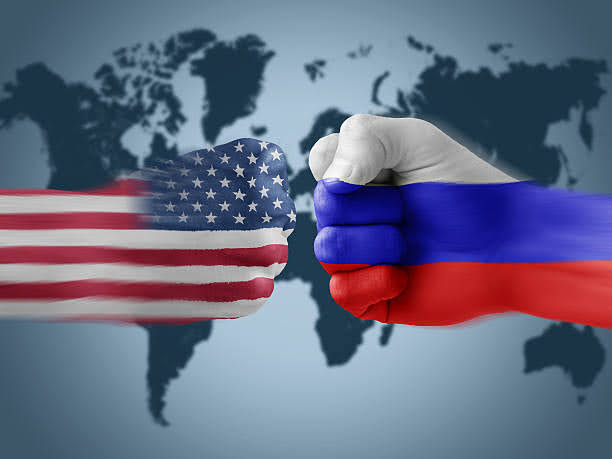
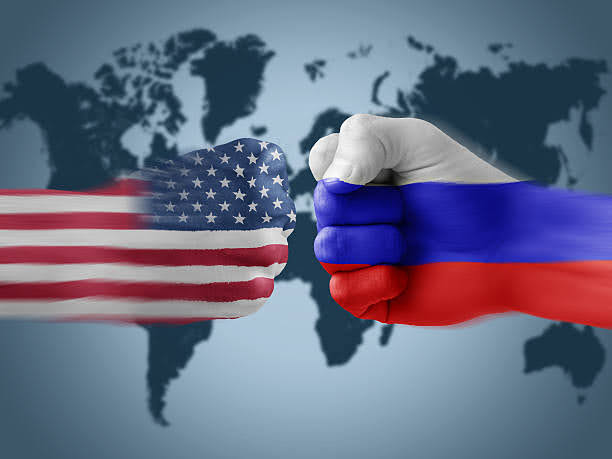
A new Hot-Cold War has erupted, with Russia posing a threat to the liberal international order. 

Little has changed in the general relationship between Russia and the West in the more than half-decade since the onset of the Ukrainian conflict, Russia's military action, and the application of Western sanctions against Russia. 

In reality, ties have deteriorated as Russia continues to intervene in Ukraine and meddles more heavily in the internal politics of Western democracies. 

Despite the drop in international energy prices and the expenses associated with European Union and US sanctions, the Russian economy seemed to recover prior to the coronavirus pandemic in 2020, with an annual growth rate of 1.5–2.5 percent ("Russia: Real GDP" 2020). 

More importantly, the sanctions and the resulting internal economic woes in Russia have not persuaded Russia's political leadership to make a meaningful adjustment in the country's foreign policy. 

Indeed, Moscow's muscular actions in Ukraine, as well as more lately in Syria, have become a significant aspect of the Putin regime's drive to re-establish Russia's status as a great power and, as a result, enhance its political support among a broad segment of the populace (Berryman 2017). 

Russian ties with the United States and the European Union have deteriorated dramatically since the turn of the century, as this chapter demonstrates. 

President Putin is determined to restore Russia's dominance in regional and global affairs. 

"Strengthening the country's defense, ensuring the inviolability of the Russian Federation's constitutional order, sovereignty, independence, and national and territorial integrity," according to the 2015 Security Strategy, and "consolidating the Russian Federation's status as a leading world power, whose actions aim to maintain strategic stability and mutually beneficial partnerships in a polycentric world" (Russian Federation 2015). 

Given the Russian political elite's aim of re-establishing Russia's status as a global power and maintaining control over the Russian internal political system, forceful nationalism has become a key tool in achieving both of those goals. 

The European Union, which was formerly seen as a benign actor in Moscow, is now seen as a rival for influence in post-Soviet territory and a hindrance to Russia's efforts to reclaim its position as the dominating actor in Eurasia and a key role in world affairs. 

This rivalry, as well as the possibility of a domestic political challenge to Putin's leadership, is at the heart of the conflict that erupted in Ukraine in 2013–2014 and continues to sour ties four years later. 

The chances of a meaningful improvement in ties in the near future are slim, since Russia's long-term aims and those of the European Union remain at odds. 

The Russian leadership's determination to reclaim power throughout much of Eurasia is at odds with the EU's goal of spreading its influence into the post-Soviet region, as well as the more general goal of sustaining the liberal international order that has dominated for the last quarter-century. 

Moscow does not recognize the basic values that underpin the present international order, as different members of the Russian leadership have made plain in recent years, and will do all it can to destroy it (Kanet 2018b). 

Russia has used military interventions in Georgia and Ukraine, cyber-attacks against a variety of post-communist states (Imeson 2019), support for radical nationalist groups in EU member countries, and meddling in democratic elections in Europe and North America to weaken the Western-dominated international system. 

The conflict between Russia and the United States and the European Union will continue until one side or the other abandons some of the objectives that have been central to its policy – in effect, its sense of identity – something that seemed unlikely until President Donald Trump's election cast doubt on virtually every aspect of US foreign policy. 

Let me return to the subject of the elements that shape Russian foreign and security policy before quickly commenting on the effect of Trump's victory and administration. 

External factors, such as Western efforts to extend their influence eastward into former Soviet-controlled areas, have been important, as discussed above, because it has allowed Putin and other Russian leaders to portray Western actions as a threat to overall Russian security as part of their effort to consolidate domestic support. 

Officially, Russian strategic culture has evolved from an emphasis on domestic issues and possible cooperation with the West a quarter-century ago to a focus on external dangers, almost all of which are said to originate in the West. 

But, more importantly than Western behavior, the Putin leadership's dedication to preserving power and the exploitation of Western actions to develop home support for a more aggressive foreign policy and more restricted, even authoritarian, internal control has been more essential.


~ Jai Krishna Ponnappan


You may also want to read and learn more about Global Geo Politics, Conflicts, And Conflict Resolution here.

Find Jai on Twitter | LinkedIn | Instagram


References & Further Reading


Abramov, Roman and A. A. Chistiakova (2012). “Nostal'nicheskie Reprezentatsii Pozdnego Sovetskogo Periodav Media Proektakh L.Parfenova: Povolnam KollektivnoIpamiati.” Mezhdunarodnyi zhurnal issledovanii kul'tury, 1, pp. 52–58. http://culturalresearch.ru/files/open_issues/01_2012/IJCR_01(6)_2012_abram_chist.pdf

Adomeit, Hannes (1995). “Russia as a ‘Great Power’ in World Affairs: Images and Reality.” International Affairs 71, no. 1, pp. 35–68. 

Akchurina, Viktoria, and Vincent Della Sala (2018). “Russia, Europe and the Ontological Security Dilemma: Narrating the Emerging Eurasian Space,” Europe Asia Studies, 70, no. 10, pp. 1638–1655. Published online: December 24, 2018. 

Aksakov, Konstantin (1966). “On the Internal State of Russia,” in M. Raeff, ed., Russian Intellectual History: An Anthology. Amherst, NY: Prometheus Books, pp. 231–251. 

Billington, James H. (2004). Russia in Search of Itself. Washington: Woodrow Wilson Center Press. 

Boym. Svetlana (1995). “From the Russian Soul to Post-Communist Nostalgia.” Representations, 49, pp. 133–166. DOI: 10.2307/2928753. 

Burton, Robert A. (2009). On Being Certain: Believing You Are Right Even When You're Not. New York: Macmillan. 

Cherniavsky, Michael (1959). “Khan or Basileus: An Aspect of Russian Mediaeval Political Theory.” Journal of the History of Ideas 20, no. 4, pp. 459–476. 

Danilevskii, Nikolai (1869). “ Rossiia i Evropa”, Zaria, pp. 1–10. 

David-Fox, Michael (2015). Crossing Borders: Modernity, Ideology, and Culture in Russia and the Soviet Union. Pittsburgh: University of Pittsburgh Press. 

Della Sala, Vincent and Viktoria Akchurina (2019). “Love and Fear in the Neighbourhood: Emotions and Ontological Security in Foreign Policy Analysis.” APSA Preprints. Working Paper. doi: 10.33774/apsa-2019-dzv4j. 

Forsberg, Tuomas (2014). “Status Conflicts Between Russia and the West: Perceptions and Emotional Biases.” Communist and Post-Communist Studies, 47, no. 3, pp. 323–331. 

Giddens, Anthony (1991). Modernity and Self-identity: Self and Society in the Late Modern Age. Stanford, CA: Stanford University Press. 

Gorbachev, Oleg (2015). “The Namedni Project and the Evolution of Nostalgia in post-Soviet Russia.” Canadian Slavonic Papers 57, no. 3-4, pp. 180–194. 30 Dina Moulioukova with Roger E. Kanet 

Gumilëv, Lev (1990). Nikolaevič. Ėtnogenez i biosfera Zemli. Leningrad: Gidrometeoizdat. 

Grimes, William (2018). “Richard Pipes, Historian of Russia and Reagan Aide, Dies at 94.” The New York Times, May 17, https://www.nytimes.com/2018/05/17/obituaries/richard-pipes-historian-of-russia-and-reagan-aide-dies-at-94.html

Hankiss, Agnes (1981). “Ontologies of the Self: On the Mythological Rearranging of One’s Life History,” in D. Bertaux, ed., Biography and Society. Beverly Hills, CA: Sage. 

Hansen, Flemming Splidsboel (2016). “Russia’s Relations with the West: Ontological Security Through Conflict.” Contemporary Politics, 22, no. 3, pp. 359–375. 

Hopf, Ted (2002). Social Construction of International Politics: Identities & Foreign Policies, Moscow, 1955 and 1999. Ithaca, NY: Cornell University Press. 

Hosking, Geoffrey (1995). “The Freudian Frontier.” Times literary supplement, TLS 4797, p. 27. 

Kanet, Roger E. ed. (2007). Russia: Re-emerging Great Power. New York: Palgrave Macmillan. 

Kanet, Roger E. (2019). “Russian Strategic Culture, Domestic Politics and Cold War 2.0.” European Politics and Society, 20, no. 2, pp. 190–206. 

Kanet, Roger E. and Susanne M. Birgerson (1997). “The Domestic-Foreign Policy Linkage in Russian Politics: Nationalist Influences on Russian Foreign Policy.” Communist and Post-Communist Studies, 30, no. 4, pp. 35–44. 

Kliuchevskii, V. O. (1937). Kurs russkoi istorii, 5 vols. Moscow: Gos. Sots. Ekon. Izdatel’stvo. 

Kotkin, Stephen (2016). “Russia’s Perpetual Geopolitics: Putin Returns to the Historical Pattern.” Foreign Affairs, 95, p. 2. 

Kononenko, Vadim (2011). “Introduction,” in Vadim Kononenko and Arkady Moshes, eds. Russia as a Network State. Basingstoke: Palgrave-Macmillan, p. 6. Kozyrev, Andrei (1994). “The Lagging Partnership.” Foreign Affairs, 73, no. 3, pp. 59–71. 

Krashennikova, Veronica (2007). America - Russia: Cold War of Cultures: How American Values Refract Vision of Russia. Moscow: Ltd. Labirintru. 

LeDoux, Joseph E. (2003). Synaptic Self: How Our Brains Become Who We Are. London: Penguin. 

Leichtova, Magda (2014). Misunderstanding Russia: Russian Foreign Policy and the West. Farnham, UK: Ashgate Publishing, Ltd. 

Levada Center (2015). “Russian Participation in the Syrian Military Conflict,” June 16. http://www.levada.ru/en/2015/11/06/russian-participation-in-the-syrian-military-conflict/print/

Levada Center (2014). “68% of Russian Citizens Consider Russia a Superpower. In Levada-Center, December 23. http://www.levada.ru/eng/68-russian-citizens-consider-russia-superpower

Levada Center (2020). “Levada Center: 25 Percent of Russians Favor Constitutional Changes; 65 Percent Don’t Understand Them,” Open Media, February 28. https://meduza.io/en/news/2020/02/28/levada-center-25-percent-of-russians-favor-constitutional-changes-65-percent-don-t-understand-them

Lipman, Maria (2016). “How Putin Silences Dissent: Inside the Kremlin’s Crackdown.” Foreign Affairs, 95, no. 3, pp. 38–46. Russia’s self-image 31 

Mankoff, Jeffrey (2009). Russian Foreign Policy: The Return of Great Power Politics. Lanham, MD: Rowman and Littlefield. 

Mitzen, Jennifer (2006). “Anchoring Europe’s Civilizing Identity: Habits, Capabilities and Ontological Security 1.” Journal of European Public Policy, 13, no. 2, pp. 270–285. 

Moulioukova, Dina, with Roger E. Kanet (2020). “Assertive Foreign Policy Despite Diminished Capabilities: Russian Involvement in Syria.” Global Affairs, 6, no. 3, pp. 247–268. https://doi.org/10.1080/23340460.2020.1842787

Moulioukova, Dina with Roger E. Kanet (2022). “The Battle of Ontological Narratives: Russia and the Annexation of Crimea,” chapter 5 of this volume. 

Neumann, Iver B. (2008). “Russia as a Great Power, 1815–2007.” Journal of International Relations and Development, 11, no. 2, pp. 128–151. 

The Other Day 1961–2003. “Namedni 1961–2003: Nasha Era” (The other day 1961–2003: our Era). TV Series, 1997–2003. https://www.imdb.com/title/tt0764146/

Oushakine, Serguei Alex (2007). “We’re Nostalgic but We’re Not Crazy”: Retrofitting the Past in Russia.” The Russian Review, 66, no. 3, pp. 451–482. 

Patterson, Molly and Kristen Renwick Monroe (1998). “Narrative in Political Science.” Annual Review of Political Science, 1, pp. 315–331. https://doi.org/10.114 6/annurev.polisci.1.1.315. 

Pavlovsky, Gleb (2016). “Russian Politics Under Putin: The System Will Outlast the Master.” Foreign Affairs, 95, no. 3, pp. 10–17. 

Pipes, Richard (1996). “Russia’s Past, Russia’s Future.” Commentary, 101, no. 6, pp. 30. 

Pipes, Richard (1974). Russia Under the Old Regime. New York: Charles Scribner’s Sons. 

Pipes. Richard (1995). Russia Under the Old Regime. New York: Penguin Books, 2nd edn. 

Primakov, Andrei (1996). “Primakov Wants ‘Great’ Russia, but Calms West.” Reuters, January 12, 1996. 

Prizel, Ilya (1998). National Identity and Foreign Policy: Nationalism and Leadership in Poland, Russia and Ukraine. Cambridge, UK: Cambridge University Press. 

Putin, Vladimir (2005). “Annual Address to the Federal Assembly of the Russian Federation.” April 25. http://en.kremlin.ru/events/president/transcripts/22931

Putin, Vladimir (2003). “Poslanie federal’nomu sobraniu Rossiiskoi federatsii,” May 16. http://pravdaoputine.ru/official-putin/putin-poslanie-federalnomu-sobraniyu-rossiyskoy-federatsii-2003-text-audio

Raeff, Marc (1971). “Patterns of Russian Imperial Policy Toward the Nationalities,” in Edward, Allworth, ed., Soviet Nationality Problems. New York: Columbia Press, pp. 22–42. 

Razyvayev, V. (1992). “Forecast: Sticks and Carrots – Controversial Reflections on Russian Foreign Policy. Nezavisimaya gazeta, in Current Digest of the Post-Soviet Press, March 5, 44, no. 10, pp. 15. 

Roe, Paul (2000). “Former Yugoslavia: The Security Dilemma that Never Was?” European Journal of International Relations, 6, no. 3, pp. 373–393. 

Rossdale, Chris (2015). “Enclosing Critique: The Limits of Ontological Security.” International Political Sociology, 9, no. 4, pp. 369–386. 

Sakwa, Richard (2015). “The Death of Europe? Continental Fates after Ukraine. International Affairs, 91, no. 3, pp. 553–579. 32 Dina Moulioukova with Roger E. Kanet 

Savitskii, Petr N. (2003). “Evraziistvo.” (Eurasianism) in K. Pavlovsky, Gleb (2016). “Russian Politics Under Putin: The System Will OutlastKorolev, ed., Klassika Geopolitiki. XX vek (Classical Works of Geopolitics. 20th Century). Moscow: AST. Vol. 2, pp. 653–699. 

Sergeevich, Vasilii I. (1909) Drevnosti Russkogo Prava, .(St. Petersburg), 3d ed., 145. 

Steele Brent, J. (2008). Ontological Security in International Relations: Self-Identity and the IR State. Abingdon-New York: Routledge. 

Stent, Angela (2007). “Reluctant Europeans: Three Centuries of Russian Ambivalence Toward the West", in R. Legvold, ed., Russian Foreign Policy in the Twenty-first Century and the Shadow of the Past. New York: Columbia University Press. 

Subotić, Jelena (October 2016). “Narrative, Ontological Security, and Foreign Policy Change.” Foreign Policy Analysis, 12, no. 4, pp. 610–627. 

Surkov, Vladislav (2006). “Suverenitet—Eto Politicheskii Sinonim Konkurentosp￾osobnosti.” (Sovereignty–Is the Political Synonym for Competitiveness). Moscow: Edinaya Rossiya, p. 22. 

Thorun, Christian (2009). Explaining Change in Russian Foreign Policy: The Role of  Ideas in Post-Soviet Russia’s Conduct Towards the West. Basingstoke: Palgrave Macmillan. 

Trenin, Dmitriĭ (2002). The End of Eurasia: Russia on the Border between Geopolitics and Globalization. Washington: Carnegie Endowment. 

Trenin, Dmitri (2006). “Russia Leaves the West.” Foreign Affairs, 85, no. 4, pp. 87–96. 

Tsygankov, Andrei P. (2012). Russia and the West from Alexander to Putin: Honor in International Relations. Cambridge: Cambridge University Press. 

Tsygankov, Andrei P. (2014). The Strong State in Russia: Development and Crisis. New York: Oxford University Press. 

Tsygankov, Andrei P. (2016). Russia’s Foreign Policy: Change and Continuity in National Identity. Lanham, MD: Rowman & Littlefield. 

Tuminez, Astrid S. (2000). Russian Nationalism since 1856: Ideology and the Making of Foreign Policy. Lanham, MD: Rowman & Littlefield. 

Vernadsky, George (1963). The Mongols and Russia. New Haven, CT: Yale University Press. 

Vujačić, Veljko (2015). Nationalism, Myth, and the State in Russia and Serbia. Cambridge: Cambridge University Press. 

Weber, Max, A. M. Henderson and Talcott Parsons (1947). The Theory of Economic and Social Organization. New York: Oxford University Press. 

“Westernizers” (2013). The Columbia Electronic Encyclopedia®. Retrieved April 18, 2020 from https://encyclopedia2.thefreedictionary.com/Westernizers


Oil Wars And The Conflict That Pit Russia Against NATO And The EU.


President Putin's assault on the US and the West in Munich marked a significant shift in Russia's Western-oriented strategy, which had been prevalent in official Russian security culture for a decade. 

External threats to Russian security have now been established as the main source of concern. 

In response to concerns from the EU and the US about the quality of Russian democracy, Moscow's leadership claimed that Russia had its own "sovereign democracy," emphasizing the sovereignty part (Gould-Davies 2016). 

As a result, Russian democracy could not be assessed by Western standards, which were mostly irrelevant to it (Herd 2009). 

It was also at this time that specific Russian policy activities started to target Western interests, frequently in reaction to perceived threats from the US and the European Union. 

The "gas wars" between Russia and Ukraine in 2006 and 2009, which resulted in natural gas cutoffs to EU member nations in the middle of winter, were the first serious conflict with the European Union. 

The Russian military involvement in Georgia in August 2008 happened between the two incidents (when the Georgian president decided to use his new NATO-built military to force the reintegration of secessionist territories). 

Furthermore, Moscow conducted economic boycotts and launched cyberattacks against new EU member states with whom it was increasingly at odds politically. 

All of these disputes stemmed from Russia's desire to halt and, if possible, reverse further Western incursion into what it saw to be its lawful sphere of influence (Kanet 2010a; Polese and Beacgáin 2011; Papert 2014). 

The problem in the "gas wars" was a long-standing disagreement over the price of Russian energy supplies to Ukraine as well as Ukrainian transit fees for Russian gas destined for Europe. 

This problem had been settled each year via discussions until the Orange Revolution and the toppling of Kyiv's pro-Russian administration. 

However, now that Ukraine has an EU-friendly administration, compromise has become more difficult, and political conflict has erupted. 

The standoff concluded in a confrontation in which Moscow accepted the political risks of failing to supply gas supplies, which resulted in the total stoppage of gas flow to Ukraine. 

Moscow's goal was to establish who was the more powerful player in the conflict. 

Russia must not seem to back down in the Ukraine issue as part of its desire to re-establish Russian supremacy in post-Soviet space, even if it meant long-term consequences in ties with the EU. 

The EU, for its part, initiated an energy diversification policy to wean itself off of Russia - a move that has only added to the worsening of relations (Umbach 2010; Moulioukova and Kanet 2017). 

In many ways, the fundamental problem that sparked Russia's five-day conflict with Georgia in August 2008 had similar origins: After the color revolutions, Russia has been more opposed to former Soviet states' incorporation into Western-dominated institutions. 

Tbilisi had elected a government devoted to stronger connections with the West, including NATO membership and wider ties with the EU, after the so-called Rose Revolution. 

These developments, according to Moscow, run opposed to Russia's objective of reclaiming a dominant position inside the former Soviet area. 

Even though NATO had not yet agreed to President Bush's request to admit Georgia in 2008, Georgian President Mikhail Saakashvili decided that the refurbished military provided by NATO through the Partnership for Peace Program could be used to resolve the long-standing frozen conflicts in South Ossetia and Abkhazia (Ambrosio 2019). 

The outcome was disastrous for Georgia. 

Russian soldiers intervened and routed the newly formed Georgian army; separatist regions proclaimed formal independence, following the model of Kosovo; and Moscow acknowledged their independence. 

The Russian military intervention sent a clear message to Georgians, Ukrainians, and Americans that, after more than a decade of verbal opposition to NATO expansion, Russia was now in a position to use military means to prevent further eastward expansion of Western political and security institutions, even if it meant worsening relations with both the US and Western Europe. 

17 Several more causes contributed to the decline in East–West ties in the first decade of the twenty-first century, in addition to these general unfavorable tendencies. 

The majority of new EU member states from Central and Eastern Europe carried with them fears and animosities toward Russia founded on decades, if not centuries, of previous interactions (DeBardeleben 2009; Schmidt-Felzman 2014). 

As a result, it's no wonder that Russia's readiness to intimidate and force weaker neighbors has reawakened major concerns among prospective EU members about their long-term security. 

Ethnic Russians staged public demonstrations in Tallinn and outside the Estonian embassy in Moscow in 2007, for example, when the Estonian government relocated a Soviet war monument from the center of Tallinn to its international military cemetery (Herzog 2011). 

Following this, Russian oil and coal supplies were halted, as well as a large cyber-attack that effectively shut down Estonia's information technology industry ("Bronze Meddling" 2007). 

Furthermore, after bilateral conflicts with Russia, both Poland and Lithuania utilized their veto power to delay the drafting of a new EU-Russia collaboration agreement for more than a year and a half. 

These and other concerns divided the EU and Russia during a joint conference in May 2007, preventing any substantive agreement on subjects regarded crucial by one or the other side (Dempsey 2007; Lowe 2007). 

As a result, Russian ties with the European Union and its main member nations worsened substantially throughout Putin's second term as Russian President and into the presidency of Dmitry Medvedev. 

The EU was no longer seen as a mostly inconsequential organisation that Russia could simply ignore or disregard. 

Despite the absence of a cohesive European Union strategy toward Russia during this time, the overall relationship continued to deteriorate. 

Part of this may be observed in Russian challenges to the EU's claims to moral authority, as well as accusations that the EU has double standards when it comes to human-rights rules, ethnic minorities' treatment, and economic issues (Facon 2008; Neumann 2014; Kanet 2015). 

In terms of Russia's strategic culture, the leadership has become more focused on security challenges from the West and strategies to counter them. 

Relations between the Russian Federation and the European Union were at an all-time low when Putin handed over the presidency to Dimitri Medvedev in 2008, not just as a result of general changes in East–West relations, but also for reasons unrelated to the Russo–American rivalry. 

A key characteristic of the battle was the escalating competition for regional clout. 

The general complexion of Russia–EU ties did not alter much during Medvedev's four years in office. 

However, Medvedev was able to pursue a more liberal foreign policy than his predecessor, and the two sides were able to establish an agreement on a number of areas of mutual interest, which we will explore in the next section (Trenin 2014; McFaul 2018, 76–238).


~ Jai Krishna Ponnappan


You may also want to read and learn more about Global Geo Politics, Conflicts, And Conflict Resolution here.

Find Jai on Twitter | LinkedIn | Instagram


References & Further Reading


Abramov, Roman and A. A. Chistiakova (2012). “Nostal'nicheskie Reprezentatsii Pozdnego Sovetskogo Periodav Media Proektakh L.Parfenova: Povolnam KollektivnoIpamiati.” Mezhdunarodnyi zhurnal issledovanii kul'tury, 1, pp. 52–58. http://culturalresearch.ru/files/open_issues/01_2012/IJCR_01(6)_2012_abram_chist.pdf

Adomeit, Hannes (1995). “Russia as a ‘Great Power’ in World Affairs: Images and Reality.” International Affairs 71, no. 1, pp. 35–68. 

Akchurina, Viktoria, and Vincent Della Sala (2018). “Russia, Europe and the Ontological Security Dilemma: Narrating the Emerging Eurasian Space,” Europe Asia Studies, 70, no. 10, pp. 1638–1655. Published online: December 24, 2018. 

Aksakov, Konstantin (1966). “On the Internal State of Russia,” in M. Raeff, ed., Russian Intellectual History: An Anthology. Amherst, NY: Prometheus Books, pp. 231–251. 

Billington, James H. (2004). Russia in Search of Itself. Washington: Woodrow Wilson Center Press. 

Boym. Svetlana (1995). “From the Russian Soul to Post-Communist Nostalgia.” Representations, 49, pp. 133–166. DOI: 10.2307/2928753. 

Burton, Robert A. (2009). On Being Certain: Believing You Are Right Even When You're Not. New York: Macmillan. 

Cherniavsky, Michael (1959). “Khan or Basileus: An Aspect of Russian Mediaeval Political Theory.” Journal of the History of Ideas 20, no. 4, pp. 459–476. 

Danilevskii, Nikolai (1869). “ Rossiia i Evropa”, Zaria, pp. 1–10. 

David-Fox, Michael (2015). Crossing Borders: Modernity, Ideology, and Culture in Russia and the Soviet Union. Pittsburgh: University of Pittsburgh Press. 

Della Sala, Vincent and Viktoria Akchurina (2019). “Love and Fear in the Neighbourhood: Emotions and Ontological Security in Foreign Policy Analysis.” APSA Preprints. Working Paper. doi: 10.33774/apsa-2019-dzv4j. 

Forsberg, Tuomas (2014). “Status Conflicts Between Russia and the West: Perceptions and Emotional Biases.” Communist and Post-Communist Studies, 47, no. 3, pp. 323–331. 

Giddens, Anthony (1991). Modernity and Self-identity: Self and Society in the Late Modern Age. Stanford, CA: Stanford University Press. 

Gorbachev, Oleg (2015). “The Namedni Project and the Evolution of Nostalgia in post-Soviet Russia.” Canadian Slavonic Papers 57, no. 3-4, pp. 180–194. 30 Dina Moulioukova with Roger E. Kanet 

Gumilëv, Lev (1990). Nikolaevič. Ėtnogenez i biosfera Zemli. Leningrad: Gidrometeoizdat. 

Grimes, William (2018). “Richard Pipes, Historian of Russia and Reagan Aide, Dies at 94.” The New York Times, May 17, https://www.nytimes.com/2018/05/17/obituaries/richard-pipes-historian-of-russia-and-reagan-aide-dies-at-94.html

Hankiss, Agnes (1981). “Ontologies of the Self: On the Mythological Rearranging of One’s Life History,” in D. Bertaux, ed., Biography and Society. Beverly Hills, CA: Sage. 

Hansen, Flemming Splidsboel (2016). “Russia’s Relations with the West: Ontological Security Through Conflict.” Contemporary Politics, 22, no. 3, pp. 359–375. 

Hopf, Ted (2002). Social Construction of International Politics: Identities & Foreign Policies, Moscow, 1955 and 1999. Ithaca, NY: Cornell University Press. 

Hosking, Geoffrey (1995). “The Freudian Frontier.” Times literary supplement, TLS 4797, p. 27. 

Kanet, Roger E. ed. (2007). Russia: Re-emerging Great Power. New York: Palgrave Macmillan. 

Kanet, Roger E. (2019). “Russian Strategic Culture, Domestic Politics and Cold War 2.0.” European Politics and Society, 20, no. 2, pp. 190–206. 

Kanet, Roger E. and Susanne M. Birgerson (1997). “The Domestic-Foreign Policy Linkage in Russian Politics: Nationalist Influences on Russian Foreign Policy.” Communist and Post-Communist Studies, 30, no. 4, pp. 35–44. 

Kliuchevskii, V. O. (1937). Kurs russkoi istorii, 5 vols. Moscow: Gos. Sots. Ekon. Izdatel’stvo. 

Kotkin, Stephen (2016). “Russia’s Perpetual Geopolitics: Putin Returns to the Historical Pattern.” Foreign Affairs, 95, p. 2. 

Kononenko, Vadim (2011). “Introduction,” in Vadim Kononenko and Arkady Moshes, eds. Russia as a Network State. Basingstoke: Palgrave-Macmillan, p. 6. Kozyrev, Andrei (1994). “The Lagging Partnership.” Foreign Affairs, 73, no. 3, pp. 59–71. 

Krashennikova, Veronica (2007). America - Russia: Cold War of Cultures: How American Values Refract Vision of Russia. Moscow: Ltd. Labirintru. 

LeDoux, Joseph E. (2003). Synaptic Self: How Our Brains Become Who We Are. London: Penguin. 

Leichtova, Magda (2014). Misunderstanding Russia: Russian Foreign Policy and the West. Farnham, UK: Ashgate Publishing, Ltd. 

Levada Center (2015). “Russian Participation in the Syrian Military Conflict,” June 16. http://www.levada.ru/en/2015/11/06/russian-participation-in-the-syrian-military-conflict/print/

Levada Center (2014). “68% of Russian Citizens Consider Russia a Superpower. In Levada-Center, December 23. http://www.levada.ru/eng/68-russian-citizens-consider-russia-superpower

Levada Center (2020). “Levada Center: 25 Percent of Russians Favor Constitutional Changes; 65 Percent Don’t Understand Them,” Open Media, February 28. https://meduza.io/en/news/2020/02/28/levada-center-25-percent-of-russians-favor-constitutional-changes-65-percent-don-t-understand-them

Lipman, Maria (2016). “How Putin Silences Dissent: Inside the Kremlin’s Crackdown.” Foreign Affairs, 95, no. 3, pp. 38–46. Russia’s self-image 31 

Mankoff, Jeffrey (2009). Russian Foreign Policy: The Return of Great Power Politics. Lanham, MD: Rowman and Littlefield. 

Mitzen, Jennifer (2006). “Anchoring Europe’s Civilizing Identity: Habits, Capabilities and Ontological Security 1.” Journal of European Public Policy, 13, no. 2, pp. 270–285. 

Moulioukova, Dina, with Roger E. Kanet (2020). “Assertive Foreign Policy Despite Diminished Capabilities: Russian Involvement in Syria.” Global Affairs, 6, no. 3, pp. 247–268. https://doi.org/10.1080/23340460.2020.1842787

Moulioukova, Dina with Roger E. Kanet (2022). “The Battle of Ontological Narratives: Russia and the Annexation of Crimea,” chapter 5 of this volume. 

Neumann, Iver B. (2008). “Russia as a Great Power, 1815–2007.” Journal of International Relations and Development, 11, no. 2, pp. 128–151. 

The Other Day 1961–2003. “Namedni 1961–2003: Nasha Era” (The other day 1961–2003: our Era). TV Series, 1997–2003. https://www.imdb.com/title/tt0764146/

Oushakine, Serguei Alex (2007). “We’re Nostalgic but We’re Not Crazy”: Retrofitting the Past in Russia.” The Russian Review, 66, no. 3, pp. 451–482. 

Patterson, Molly and Kristen Renwick Monroe (1998). “Narrative in Political Science.” Annual Review of Political Science, 1, pp. 315–331. https://doi.org/10.114 6/annurev.polisci.1.1.315. 

Pavlovsky, Gleb (2016). “Russian Politics Under Putin: The System Will Outlast the Master.” Foreign Affairs, 95, no. 3, pp. 10–17. 

Pipes, Richard (1996). “Russia’s Past, Russia’s Future.” Commentary, 101, no. 6, pp. 30. 

Pipes, Richard (1974). Russia Under the Old Regime. New York: Charles Scribner’s Sons. 

Pipes. Richard (1995). Russia Under the Old Regime. New York: Penguin Books, 2nd edn. 

Primakov, Andrei (1996). “Primakov Wants ‘Great’ Russia, but Calms West.” Reuters, January 12, 1996. 

Prizel, Ilya (1998). National Identity and Foreign Policy: Nationalism and Leadership in Poland, Russia and Ukraine. Cambridge, UK: Cambridge University Press. 

Putin, Vladimir (2005). “Annual Address to the Federal Assembly of the Russian Federation.” April 25. http://en.kremlin.ru/events/president/transcripts/22931

Putin, Vladimir (2003). “Poslanie federal’nomu sobraniu Rossiiskoi federatsii,” May 16. http://pravdaoputine.ru/official-putin/putin-poslanie-federalnomu-sobraniyu-rossiyskoy-federatsii-2003-text-audio

Raeff, Marc (1971). “Patterns of Russian Imperial Policy Toward the Nationalities,” in Edward, Allworth, ed., Soviet Nationality Problems. New York: Columbia Press, pp. 22–42. 

Razyvayev, V. (1992). “Forecast: Sticks and Carrots – Controversial Reflections on Russian Foreign Policy. Nezavisimaya gazeta, in Current Digest of the Post-Soviet Press, March 5, 44, no. 10, pp. 15. 

Roe, Paul (2000). “Former Yugoslavia: The Security Dilemma that Never Was?” European Journal of International Relations, 6, no. 3, pp. 373–393. 

Rossdale, Chris (2015). “Enclosing Critique: The Limits of Ontological Security.” International Political Sociology, 9, no. 4, pp. 369–386. 

Sakwa, Richard (2015). “The Death of Europe? Continental Fates after Ukraine. International Affairs, 91, no. 3, pp. 553–579. 32 Dina Moulioukova with Roger E. Kanet 

Savitskii, Petr N. (2003). “Evraziistvo.” (Eurasianism) in K. Pavlovsky, Gleb (2016). “Russian Politics Under Putin: The System Will OutlastKorolev, ed., Klassika Geopolitiki. XX vek (Classical Works of Geopolitics. 20th Century). Moscow: AST. Vol. 2, pp. 653–699. 

Sergeevich, Vasilii I. (1909) Drevnosti Russkogo Prava, .(St. Petersburg), 3d ed., 145. 

Steele Brent, J. (2008). Ontological Security in International Relations: Self-Identity and the IR State. Abingdon-New York: Routledge. 

Stent, Angela (2007). “Reluctant Europeans: Three Centuries of Russian Ambivalence Toward the West", in R. Legvold, ed., Russian Foreign Policy in the Twenty-first Century and the Shadow of the Past. New York: Columbia University Press. 

Subotić, Jelena (October 2016). “Narrative, Ontological Security, and Foreign Policy Change.” Foreign Policy Analysis, 12, no. 4, pp. 610–627. 

Surkov, Vladislav (2006). “Suverenitet—Eto Politicheskii Sinonim Konkurentosp￾osobnosti.” (Sovereignty–Is the Political Synonym for Competitiveness). Moscow: Edinaya Rossiya, p. 22. 

Thorun, Christian (2009). Explaining Change in Russian Foreign Policy: The Role of  Ideas in Post-Soviet Russia’s Conduct Towards the West. Basingstoke: Palgrave Macmillan. 

Trenin, Dmitriĭ (2002). The End of Eurasia: Russia on the Border between Geopolitics and Globalization. Washington: Carnegie Endowment. 

Trenin, Dmitri (2006). “Russia Leaves the West.” Foreign Affairs, 85, no. 4, pp. 87–96. 

Tsygankov, Andrei P. (2012). Russia and the West from Alexander to Putin: Honor in International Relations. Cambridge: Cambridge University Press. 

Tsygankov, Andrei P. (2014). The Strong State in Russia: Development and Crisis. New York: Oxford University Press. 

Tsygankov, Andrei P. (2016). Russia’s Foreign Policy: Change and Continuity in National Identity. Lanham, MD: Rowman & Littlefield. 

Tuminez, Astrid S. (2000). Russian Nationalism since 1856: Ideology and the Making of Foreign Policy. Lanham, MD: Rowman & Littlefield. 

Vernadsky, George (1963). The Mongols and Russia. New Haven, CT: Yale University Press. 

Vujačić, Veljko (2015). Nationalism, Myth, and the State in Russia and Serbia. Cambridge: Cambridge University Press. 

Weber, Max, A. M. Henderson and Talcott Parsons (1947). The Theory of Economic and Social Organization. New York: Oxford University Press. 

“Westernizers” (2013). The Columbia Electronic Encyclopedia®. Retrieved April 18, 2020 from https://encyclopedia2.thefreedictionary.com/Westernizers