Hybrid Warfare & Conflict - Engineering Geo-Political Power, And Spheres Of Influence.


    The lack of centralized decision-making in Europe has been shown in a harsh light. 


    Putin, like Machiavelli, may believe that it is preferable to be feared than than liked. Putin can undoubtedly brag about his rise in power. 


    • He has put Americans and Europeans on the defensive, sparked a flurry of high-level talks, and even gotten a written response to his ideas from the US and NATO (proposals which he must have known to be totally unrealistic if not impossible). 
    • Nobody doubts, if anybody ever did, that Russia is still a major force. That much has been shown by its current set of actions in Ukraine. 
    • Respect for Russia, which seems to be a strategic goal in and of itself, is another matter. It's simple to instill fear, but respect must be earned. 


    Differences in ideas between EU Member States create a hole in the absence of EU integration in diplomacy and defense, rather than forging a nuanced but forceful unified perspective. 


    • However, a history of internecine fighting should have taught Europeans one thing: exaggerating the significance of status does not alter the circumstances on the ground. As a result, there's no reason to bemoan his triumph. 


    The United States must fill that power vaccum, with which everyone rallies in the face of Russian sabre-rattling. 

    We have to be concerned about the demise of the European security architecture as we know it.


    IS EUROPE IN DANGER?


    One may threaten Ukraine with a hundred thousand soldiers, but one cannot conquer a Unified Europe. 


    On a GDP the size of Belgium and the Netherlands combined ($1.483 trillion against $1.434 trillion in 2020), one does not begin a great power war against the EU and the US. 


    • Putin may be able to put the future of Europe's security architecture on the table, but he does not have the authority to reverse it. 
    • That can only be done by European leaders who are foolish enough to pull their own nation out of the EU or cynical enough to destroy democracy and the rule of law. 
    • They endanger Europe by fracturing the Union and playing straight into the hands of other forces (sometimes even voluntarily). 


    Natural resource dependency has both positive and negative consequences. 


    Both Moscow and Brussels may threaten each other with economic penalties as a deterrent. 


    • However, sanctions can only be employed once, after which nothing will happen save that both parties would suffer economic consequences, since neither party is likely to submit to penalties and modify its policy. 
    • Economic penalties may signify displeasure and serve as punishment if that is the goal, but they will not alter the reality on the ground, just as a gain of face will not change the circumstances on the ground. 


    Russia will have to negotiate if it wants to create an acceptable and sustainable change to the security arrangements on the European continent. 


    • Negotiations take longer than Russian forces can stay focused on their current action in Ukraine without losing their advantage. 
    • Further unilateral escalation by Putin's Russia will result in a prolonged destabilization of global security and peace that must be dealt with to avert a potential Humanitarian disaster.
    • And, in order to have a chance of meaningful progress, both parties must be ready to make compromises, failing which a military resolution will result in a test of Russia's present invasive  posturing and actions in Europe.


    If Putin was sincere and capable of honoring his public statements, Europeans and Americans would have had to negotiate, as they have said they are prepared to. 


    Because restoring the weapons control and confidence-building framework that has lapsed in recent years would be very beneficial overall to Europe's security. 


    Given Ukraine borders with EU/NATO member states, Any negotiations on the European Security Architecture must, without a doubt, involve all Europeans. 

    Present Russian military mobilization, offenses,  and actions against Ukraine, its invasive occupation, and entry into eastern regions is thus tantamount to an act of war against Europe.


    Only the supranational EU can be Europe's political center of gravity. 


    • Back in 2014, the EU made the strategic choice to give Ukraine a Deep and Comprehensive Free Trade Agreement (DCFTA), to which Russia retaliated by invading the country. 
    • All of the rest, such as NATO deterrence, Normandy negotiations, and EU sanctions, stemmed from the initial decision taken by Europeans via the EU. 
    • Rather than introducing multiple forms, the EU must insist on a core trilateral arrangement if any peace is plausible, with the US and Russia, as a prerequisite for substantive discussions to begin. 
    • Refusing to do so would be siding with Putin, who has made a habit of minimizing the EU in order to undermine European unity. 


    However, it is improbable that sufficient mutual confidence can be developed to reach an agreement on the wider concerns given the unilateral violation of Ukraine's territorial integrity and its political borders. 

    Russia continues to engage in near-constant hybrid measures against Europe and the United States. 


    WHAT HAPPENS WHEN YOU INVADE AND LOOSE? 


    IS THAT AN ACCEPTABLE OUTCOME, OR CAN FACE-SAVING MEASURES BE CO-DOCTORED FOR THE HIGHER OBJECTIVE OF GLOBAL STABILITY AND PEACE AS UKRAINE PAYS THE PRICE YET AGAIN.


    Can Putin back out now that the least of the risk events has occurred, and the stakes have been increased dangerously high, with no sustainable success in Ukraine to enhance his power other than a minor pro-Russian separatist victory? 


    All of  Ukraine, in its entirety, in its resilience, in truth, is a continuing defeat for Putin. 


    • He drove a divided nation into Western orbit by invading in 2014. 
    • He conquered Crimea but failed to achieve Russia's second goal of forming a sphere of influence throughout the former Soviet Union, despite its great power status (minus the Baltic states). 
    • He will not be able to reclaim Ukraine without launching a full-scale assault. 
    • But it seems to be the least probable scenario: the Ukrainian armed forces will fight with a Western backbone this time, and Putin will not want to lose some of his finest men in a stalemate. 

    It is thus very important for the EU and the US to ensure that Ukraine has the necessary weapons, equipment, and ammunition to fight. 


    • Furthermore, assuming that Russia does not want to blow Ukraine to the ground, it cannot wield its military superiority indefinitely. 
    • An invasion would, in any case, result in military occupation, similar to the annexation of the Baltic nations in 1940. The desire to sovereignty reasserts itself when the occupation is gone, as history has shown. 


    As a result, Russia's insistence that Ukraine not join NATO is damage control. 


    • It also falls within a centuries-old policy of capturing land or establishing buffer zones along Russia's western frontiers to reduce the country's susceptibility to invasion in the absence of natural barriers. 
    • If imposing neutrality on Ukraine is all it takes for Putin to finally acknowledge that it will not be part of any Russian sphere of influence, the West perhaps could have afforded to make the compromise prior to Russia's military actions. 
    • The decision by NATO in 2008 to allow Ukraine and Georgia to join but without a deadline was a poor compromise between an aggressive Bush administration and hesitant Europeans, and the latter are still largely opposed. 


    Neutrality may be seen as another face-saving move by Putin, but such 19th-century sensibilities should not guide European policymakers today. 

    Furthermore, NATO expansion is not a goal in and of itself: new members should be welcomed only when our security requires it; nations that would bring more expenses than advantages and for which we are unwilling to go to war in any case should not be requested. 


    Neutrality cannot be a unilateral compromise. Such an unrealistic expectation is a trigger and provocation for a larger widespread conflict that will be without bounds.


    • Other than dispersing its forces, Russia has failed to make a genuine surrender, since they may be concentrated again on a whim. 
    • Moscow has failed to stop supporting armed separatists in the Donbass and allow Ukraine's government in Kiev to reclaim control of the country's whole continental territory. 
    • That is true, but it says nothing about the Crimea along with the Donbass, which is the price Ukraine is having to pay. 


    That would not be fair, because, in the words of Bismarck, 

    "we are not operating a judiciary, we are establishing policy." 

    Putin, on the other hand, may be unwilling to make this compromise. 


    Furthermore, if he is unable to reclaim Ukraine, he may decide that he does not want it to function. 


    He will not want to see a well-functioning democratic Ukraine begin to exert any kind of appeal on his own populace, therefore this is a serious danger. 

    (And neutrality would have no bearing on the DCFTA.) 

    Russia may thus conclude that, despite its limited resources, it can get more out of a stable but (in its eyes) unsatisfactory deal by triggering another escalation when it sees fit, rather than a stable but (in its eyes) unsatisfactory deal, even if instability comes at the cost of additional sanctions. 


    Sanctions along with Hybrid War Operations must be activated and  implemented, notwithstanding the fact that sanctions are unlikely to compel Russia to recede beyond its dictates and  unpredictable volatile leadership. 


    • Putin may yet choose to restrict to a military effort, such as seizing the land bridge between Donbass and Crimea. 
    • Russia would suffer fatalities, but it would establish a permanent Russian military presence in the Donbass as a fait accompli. 
    • Another possibility is a repeat of the cyber-attack on 14 January. Both of these situations might result in extra severe retaliations. 
    • The standoff would persist in all three scenarios, and perpetual instability would rule, leaving little hope for effective discussions on the larger security architecture. 


    The Desperate and Blind Pursuit Of Obsolete Spheres Of Influence In an Increasingly Connected Globe. 


    •  In mid-January 2022, when the West was focused on Ukraine, In Kazakhstan, Russia interfered immediately and effectively. 
    • Some 2000 Russian forces, operating under the auspices of the Collective Security Treaty Organisation (CSTO) and at the request of President Tokayev, assisted him in maintaining his grasp on power. 
    • In November 2020, Russia dispatched 2000 soldiers as peacekeepers at the request of another CSTO member, Armenia, after brokering a cease-fire between its ally and Azerbaijan, ending another conflict over the disputed region of Nagorno-Karabakh. 
    • In November 2021, Russian involvement was required once again to stop fighting that had broken the cease-fire. 
    • Georgia's predicament, on the other hand, is very comparable to that of Ukraine. 
    • Russia secured the separatist areas of South Ossetia and Abkhazia during the 2008 Russo-Georgian conflict, eventually recognizing them as republics. 
    • Approximately 10,000 Russian soldiers are now stationed there.  However, short of a full-scale invasion, the most Russia can hope for is a prolonged stalemate and the capacity to increase tensions anytime it wants. 


    The conclusion is that Russia continues to operate as a security guarantee in former Soviet countries when the government and military forces, with or against the populace, embrace a largely Russian orientation. 

    Belarus, for example, falls within this category. 

    However, once a nation has shifted its orientation to the West, Russia may make things difficult for it, such as stopping it from joining the EU or NATO (though membership is not on the table anyway), but it cannot force it back into the fold. 


    Meanwhile, China is competing with Russia, and in many cases has already surpassed it, as a trade and investment partner in practically all former Soviet countries. 

    In 2013, Kazakhstan hosted the launch of the Belt and Road Initiative. 

    There has formed a de facto division of labor that fits Beijing well, but one would wonder whether it really satisfies Moscow: when Russia acts as a security guarantor, it maintains the stability that enables it to no longer transform its military might into commensurate political and economic dominance. 

    As a result, an exclusive Russian sphere of influence in the former Soviet Union is a pipe dream in reality. 


    Russia doesn't have an option but to share power with China in a more or less Master-Junior Partner Bond. 


    Outside of the former Soviet Union, Russia has established a military presence, either directly or via the Wagner Group's mercenaries, in the Central African Republic, Libya, and now Mali. 

    The key success here, too, is continuing instability, which serves our goals. 

    For Russia, the eastern and southern edge of Europe is one theater in where it may exercise its nuisance power at a cheap cost. 

    Even in a nation like Mali, which is so reliant on European economic and military aid, Brussels should be considerably more concerned about its incapacity to prevent it from doing so. 

    But, although Russia may strive to entrench itself, it lacks a genuine alternative project to offer these nations, other than ensuring the regime's or claimant's security, which it opportunistically supports. 

    As internal politics change, such ties are prone to unravel. 

    The exception is Syria, where Russian assistance insured the survival of a long-time partner, but that relationship, too, is unlikely to outlast regime transition if it ever occurs. 


    Russia is also expected to fall farther behind the United States, China, and the European Union in terms of political clout and economic success. 


    It will continue to be quite simple to use its annoyance capability. 

    For the time being, Russia's military might has allowed it to punch above its political and economic weight. 

    However, keeping its limited friends, much alone acquiring new ones, will grow more difficult as other nations make more appealing political and economic proposals. 


    Will this encourage Moscow to consider a more cooperative grand strategy rather than a hostile one? Or will it continue to associate tremendous power with arrogance and aggression? 


    For its part, the EU must remain laser-focused on its most important goals: defending its own way of life while preventing instability from spilling over from either its eastern or southern flanks. 

    Stable neighboring nations that make their own sovereign decisions are a useful tool in achieving that critical goal. 

    The EU's use of nuisance power can never be an aim in itself; although it must consider how to respond against Russian neighbors, good neighborly relations must remain the ultimate goal. 

    Whatever course Putin and his successor choose, the EU must be open to conversation at all times, following the motto: cooperate when possible, but push back when necessary. 

    However, this will need the development of a much stronger European reflex in all EU member states. 

    If Europe's strategic center is a vacuum, neither collaboration nor pushback will occur, and the EU will be constantly unsettled by the next bold action from another state.


    ~ Jai Krishna Ponnappan


    You may also want to read and learn more about Global Geo Politics, Conflicts, And Conflict Resolution here.


    Sources & References:


    • Arild, S., NATIONAL RESILIENCE AS A TOOL TO COUNTER HYBRID THREATS Sunde Arild. У збірнику представлено матеріали ІІ Міжнародної науково-практичної конференції «Управління та адміністрування в умовах протидії гібридним загрозам національній безпеці». Матеріали подано у авторській редакції. Редакційна колегія може не поділяти думок авторів. За достовірність даних та унікальність поданого до друку матеріалу, p.217.
    • Coldea, F., 2022. Intelligence challenges in countering hybrid threats. National security and the future23(1), pp.49-66.
    • Панфілов, О. and Савченко, О., 2022. THE SOCIOLOGICAL ASPECT IN THE CONTENT OF THE MODERN HYBRID WARFARE. " Вісник НЮУ імені Ярослава Мудрого". Серія: Філософія, філософія права, політологія, соціологія1(52).
    • Solmaz, T., 2022. ‘Hybrid warfare’: A dramatic example of conceptual stretching. National security and the future23(1), pp.89-102.
    • Bhattacharya, I., 2022. Hybrid Warfare Teasing Security Concerns in Asia. In The Palgrave Handbook of Global Social Problems (pp. 1-15). Cham: Springer International Publishing.
    • Davies, L., 2022. A “hybrid offensive” in the Balkans? Russia and the EU-led Kosovo-Serb negotiations. European Security31(1), pp.1-20.
    • Hook, K. and Marcantonio, R., 2022. Environmental dimensions of conflict and paralyzed responses: the ongoing case of Ukraine and future implications for urban warfare. Small Wars & Insurgencies, pp.1-29.

    • Kurban, O. and Stadnichenko, O., 2022. Hybrid Conflicts in Modern Geopolitics: Based on Russian-Ukrainian Relations From 1991-2021. In Handbook of Research on Ethnic, Racial, and Religious Conflicts and Their Impact on State and Social Security (pp. 70-89). IGI Global.

    • Eberle, J. and Daniel, J., 2022. Anxiety geopolitics: Hybrid warfare, civilisational geopolitics, and the Janus-faced politics of anxiety. Political Geography92, p.102502.
    • Muradov, I., 2022. The Russian hybrid warfare: the cases of Ukraine and Georgia. Defence Studies, pp.1-24.
    • Magnuson, S., Keay, M. and Metcalf, K., 2022. Countering Hybrid Warfare: Mapping Social Contracts to Reinforce Societal Resiliency in Estonia and Beyond (Spring 2022). Texas National Security Review.
    • Gaiser, L., 2022. Chinese hybrid warfare approach and the logic of strategy. National security and the future23(1), pp.67-77.
    • Andersson, M., 2022. Russia's use of Hybrid Warfare against the European Union 2014-2020: A qualitative content analysis.
    • HOLECZ, J., THE ORIGINAL “HYBRID WARFARE”–PART I1. MILITARY NATIONAL SECURITY SERVICE, p.59.
    • Kennedy, D., 2022. The Gun, the Ship, and the Pen: Warfare, Constitutions, and the Making of the Modern World by Linda Colley. Journal of Interdisciplinary History52(3), pp.430-431.


    Cyber Warfare - ADVANCED PERSISTENT THREAT (APT).


    The phrase "advanced persistent threat" (APT) refers to extremely skilled actors who use computer networks to carry out covert offensive activities, generally through the Internet.

    Any combination of espionage, financial gain, sabotage, or reconnaissance may be the purpose of such operations.

    Actors like this are often seen working on behalf of nation-states, usually under the command of military or intelligence organizations.

    They might also be commercial companies hired by governments or, more rarely, individuals seeking personal gain (i.e., sophisticated criminals).

    The line between criminal and agent of a nation-state may be difficult to establish in certain circumstances, with the same persons or organizations showing both traits at different periods.

    The term APT seems to have been in use since 2006, initially appearing in documents written by US Air Force officials, and was popularized by Mandiant's 2013 APT1 report.

    APTs have a variety of characteristics that set them apart from other harmful actors: • Mission Focus: APTs often have particular missions and objectives, which may include gaining access to certain networks or organizations.

    It may be more difficult to effectively breach such targets than it is to compromise a typical network or individual computer.

    This is in contrast to criminal actors, who are more likely to engage in opportunistic conduct, such as spear-phishing campaigns that are large (and hence loud).

    However, an APT's strategic goals can be broad (e.g., obtaining information about a technical area or technology from any available source), and the tactics used to target a large organization can resemble those used by a less sophisticated actor; this is sometimes a deliberate choice by the APT to avoid drawing attention to the attack or to sow confusion about the attacker's identity.


    Complexity: APTs frequently have proprietary tools that have been built over time, the skills and resources to build new capabilities when required, and the training and discipline to utilize such tools to execute large-scale operations while limiting cross-contamination.

    Although spear-phishing attacks appear to be the preferred method of initial compromise in the majority of publicly disclosed APT campaigns, APTs have been known to use a variety of other attack tactics, including watering hole, malicious advertising, credential theft, social engineering, SQL injection, and software exploitation.


    Resources: APTs often have the resources to carry out a variety of attack techniques against a single target over a lengthy period of time, including inventing or acquiring previously undisclosed vulnerabilities for which no known remedy exists and no forewarning is feasible.

    Furthermore, APTs may invest a substantial amount of time and money in establishing the attack infrastructure and tools required to undertake operations.

    APTs, on the other hand, will not always utilize advanced tools and techniques; rather, mission criteria such as risk profile, urgency, and target complexity (or "hardness") will govern how operations are carried out.


    Persistence: On the Internet, criminals are usually engaged in activities that result in a quick monetary gain but are also intrinsically loud, such as stealing bank information or installing ransomware (e.g., CryptoLocker).

    APT operations, on the other hand, often need a long-term presence on a target network, such as for the continual collecting of sensitive data.

    As a consequence, APTs must function invisibly in order to reduce the time it takes for them to be identified and to set up backdoors for regaining access once they are discovered.

    While completing the mission is the major priority of an APT, secondary goals include staying undetected to avoid exposing tools, techniques, and infrastructure, preventing the identification of a discovered activity with the particular APT, and avoiding linking the APT with the proper nation.

    The relative importance of these issues varies by APT and may alter over time and among missions.

    Firewalls, deep packet inspection, and attachment detonation chambers are examples of proactive measures that may help harden an organization's security posture, but they need more work to get started.

    However, given the size and complexity of contemporary businesses and the systems that make them up, creative and patient enemies should be able to get a footing.

    When other partners, resources, and services are involved, the situation gets much more complicated.

    These additional partners, resources, and services may be targeted by an APT to aid in getting access to its target.

    APTs have typically found it simple to extend their initial access and fulfill their aims via a mix of lateral movement, privilege escalation, and the inclusion of backdoors, while corporate security has historically concentrated on perimeter protection.

    Much work has gone into establishing tools and procedures for detecting such threats once they have progressed past the first phases of compromise, as well as forensic analysis of their actions.

    Such techniques have primarily focused on analyzing large volumes of logging data to identify potentially anomalous events; identifying anomalous or "known bad" communication patterns, both within an enterprise network and at its external boundaries (e.g., at the firewall); and generating, sharing, and acting on indicators of compromise (IOC), which are externally observable and, at least in theory, invariant elements of the APT tools.

    File hashes, Internet Protocol (IP) addresses, network protocol signatures, and Windows Registry entries are just a few examples of IOCs.

    Threat information sharing has the potential to drastically shorten the mean time to next detection (MTTND) and boost the ability of defenders to attribute an assault to the degree that an APT reuses tools and infrastructure (and hence IOCs) across successive operations.


    Related Topics:


    Cyber Attack; Cyber Crime; Cyber Defense; Cyber Espionage; Mandiant 
    Corporation; People’s Liberation Army Unit 61398; People’s Republic of China 
    Cyber Capabilities; Social Engineering; Spear Phishing.


    Further Reading:


    Brenner, Joel. America the Vulnerable: Inside the New Threat Matrix of Digital Espionage, Crime, and Warfare. New York: Penguin Press, 2011.

    Lindsay, Jon R., Tai Ming Cheung, and Derek S. Reveron, eds. China and Cybersecurity: Espionage, Strategy, and Politics in the Digital Domain. New York: Oxford University Press, 2015.

    Mandiant Corporation. APT1: Exposing One of China’s Cyber Espionage Units. Alexandria, VA: Mandiant Corporation, 2013.


    Cyber Warfare - What Is Air Gapping In Cyber Security?


    The word "air gapping" refers to a security procedure implemented to safeguard a computer system against unauthorized access.

    A computer system must be separated from any local area network or public wireless network in order to be air gapped.

    Because of the sensitive information stored therein, the military, intelligence agencies, financial institutions, and even certain advocacy organizations air gap some systems.

    Air gapping is primarily a security mechanism, but it may also refer to a data transmission technique from one classified system to another.

    It's often utilized to transport material from the low side (unclassified machines) to the high side (classified equipment) (classified machines).

    On the low side, data is cut to a CD-ROM and put on the high side.

    Even isolating the system from the rest of the network may not be enough to keep it safe.

    Recent exploits have shown the importance of air gapping in critical systems.

    A hacker claimed lately that he gained access to a flight control system through the plane's media network.

    The Stuxnet virus, which infected Iranian centrifuges, was delivered through a USB device linked to the machine.

    Even if the system's exterior connections keep it safe from electromagnetic or other electrical attacks, they can't keep the system safe from internal errors or threats.

    The US government created guidelines to aid air gap computer systems under the National Security Administration's (NSA) TEMPEST program (Telecommunications Electronics Material Protected from Emanating Spurious Transmissions).

    To avoid intrusion, the guidelines propose keeping the system at a minimum safe distance and enclosing it in a Faraday cage.


    See also: 


    Cyber Security; Hardware; Internet


    Further Reading:


    Clarke, Richard A., and Robert K. Knake. Cyber War: The Next Threat to National Security and What to Do about It. New York: HarperCollins, 2010.

    Libicki, Martin. Cyberspace in Peace and War. Annapolis, MD: U.S. Naval Institute Press, 2016.


    Cyber Warfare - Who Is KEITH B. ALEXANDER?


    General Keith B. Alexander (1951–) served as director of the National Security Agency (NSA) and head of the Central Security Service (CSS) from August 2005 until his retirement in 2014, as well as commander of US Cyber Command (USCYBERCOM).

    Alexander was born on December 2, 1951, in Syracuse, New York, and graduated from the United States Military Academy at West Point in 1974 as an army second lieutenant.

    He got master's degrees from Boston University (business administration), the Naval Postgraduate School (systems technology and physics), and the National Defense University throughout his military service (security strategy).

    Alexander also has degrees from the National War College and the US Army Command and General Staff College.

    Under the authority of US Strategic Command, Alexander was in charge of planning, coordinating, and directing activities in defense of DoD computer networks via USCYBERCOM (USSTRATCOM).

    He also had overlapping duties for certain DoD national foreign intelligence and combat support operations, as well as the safeguarding of US national security information systems, while at the NSA and CSS.

    Alexander was a career military intelligence officer who held positions such as US Army deputy chief of staff, G-2; commanding general of US Army Intelligence and Security Command; director of intelligence at US Central Command (CENTCOM); and deputy director for requirements, capabilities, assessments, and doctrine (J-2) for the Joint Chiefs of Staff before taking the NSA directorship (JCS).

    When General Michael Hayden was raised to fourth star and assigned as deputy to Ambassador John Negroponte, President George W.

    Bush's pick to the newly established office of director of national intelligence, Alexander took over as NSA director (DNI).

    Alexander's time at the NSA was plagued by questions about the legality and effectiveness of the agency's data collecting efforts.

    The first exploded in December 2005, when the New York Times revealed that the National Security Agency (NSA) had been spying on Americans' phone calls and e-mail without a warrant since 2001.

    In June 2013, Edward Snowden, then a contract employee of the National Security Agency, disclosed thousands of secret papers to journalists, causing the second and most personal of these crises.

    The NSA's access to private communication was exposed by the trove of stolen papers, which showed the scope of the agency's infiltration of the information infrastructure and secret partnerships with telecoms and Internet service providers.

    The NSA has come under fire as a result of the Snowden leaks.

    After the magnitude of the leaks became public, Alex ander volunteered to retire from the NSA, but President Barack Obama resisted, protecting both the NSA's activities and its beleaguered director.

    Alexander was discharged from the military the following year.


    See also: 


    Hayden, Michael V.; National Security Agency (NSA); Obama, Barack; Snowden, Edward J.; U.S. Cyber Command (USCYBERCOM)


    Further Reading:

    Harris, Shane. The Watchers: The Rise of America’s Surveillance State. New York: Penguin Press, 2010.

    Hayden, Michael V. Playing to the Edge: American Intelligence in the Age of Terror. New York: Penguin Press, 2016.


    Cyber Warfare - Who Is DMITRI ALPEROVITCH?


    ALPEROV Dmitri Alperovitch cofounded CrowdStrike, a security technology firm that helps businesses and governments defend their intellectual property and secrets from cyber espionage and cyber crime, in 2011 and later became its chief technology officer.

    Alperovitch graduated from Georgia Tech with a master's degree in information security and a bachelor's degree in computer science.

    In the late 1990s and early 2000s, Alperovitch worked with a variety of computer security start-ups, including CipherTrust, which pioneered the TrustedSource reputation system.

    He headed the research team that developed the software as a service company when CipherTrust was bought by Secure Computing in 2006.

    When McAfee purchased Secure Computing in 2008, Alpero vitch became vice president of threat research.

    In January 2010, he oversaw Operation Aurora, a probe of Google and two dozen other firms' Chinese breaches.

    He also headed the investigation of Western multinational oil and gas firms' Night Dragon espionage program, which he tracked to a Chinese person residing in Heze City, Shandong Province, People's Republic of China.

    Alp erovitch was also honored with the coveted Government 100 Award in 2011 for his services to federal information security in the United States.

    Alperovitch was named one of Washingtonian's "Tech Titans" in 2013 and 2015 for his achievements in the area of cyber security.

    In 2013, he was named one of MIT Technology Review's "Top 35 Innovators Under 35." In addition to his work at CrowdStrike, Alperovitch is a nonresident senior fellow at the Atlantic Council's Cyber Statecraft Initiative.

    Alperovitch has done substantial research on reputation systems, spam detection, Web security, public-key and identity-based cryptography, malware detection and prevention, and public-key and identity-based cryptography.


    See also: 


    Cryptography; Encryption; McAfee


    Further Reading:


    “Atlantic Council Programs Report: July 2015.” Atlantic Council, August 3, 2015. http://www.atlanticcouncil.org/for-members/atlantic-council-programs-report-may2015-3.

    “Dmitri Alperovitch.” CrowdStrike. http://www.crowdstrike.com/dmitri-alperovitch.

    “Innovators under 35: Dmitri Alperovitch, CTO, CrowdStrike.” MIT Technology Review, October 10, 2013. https://www.technologyreview.com/s/521371/innovators-under-35-dmitri-alperovitch-cto-crowdstrike.


    Cyber Warfare - Deconstructing Cyber Attacks By The Al Qaeda.


    Al Qaeda is a Sunni jihadist organization created in 1988 by Osama bin Laden and others.

    The name Al Qaeda means "the base," which accurately describes how the group has offered a basis of training and information to subsidiaries all over the globe.

    Many countries consider the group to be a terrorist organization, including the United States, which initiated its War on Terror against Al Qaeda following the September 11, 2001 attacks.

    Despite US attempts to target most of Al Qaeda's core leadership, many observers think that the group's various "franchises," which operate in more than 30 countries, remain a formidable and varied organization.

    Al Qaeda sprang from Afghan opposition to Soviet occupation, but its principal goal was to oppose all things Western, especially those who represented the United States.

    This incorporates democratic concepts from the West.

    Al Qaeda's strategy was to entice the US into attacking and occupying a Muslim nation, which would then incite militants to fight occupation troops.

    It then intended to spread the fight across the area, dragging the US further into a protracted and expensive struggle.

    It would also begin terrorist strikes against US partners at the same time.

    Finally, it believed that by 2020, the US economy, and so the global economy, will have collapsed.

    Al Qaeda would then launch a worldwide jihad and establish a global caliphate.

    Since 9/11, Al Qaeda has stepped up its efforts to utilize cyber terrorism against the US, believing that cyber targets are just as vulnerable as airports were before 9/11.

    Al Qaeda recruits from disgruntled but often well-educated groups, giving it access to individuals who are technologically savvy.

    Nonetheless, it has spent considerably more time threatening cyber strikes than actually carrying them out.

    Al Qaeda militants, for example, tried but failed to launch distributed denial-of-service (DDoS) operations against a number of Western Web sites in 2007.

    Al Qaeda Electronic (AQE) debuted in January 2015 as the organization's first cyber franchise, while its actual affiliation to Al Qaeda is uncertain.

    AQE has mostly involved in Web site defacement, which is one of the more straightforward kinds of hacking.

    It hasn't yet chosen a high-profile Web site as a target.

    It has just a few hundred followers on Twitter and identifies Kandahar, Afghanistan as its actual location.

    Unlike the Islamic State of Iraq and Syria (ISIS), which has effectively maintained its online presence, Al Qaeda has been reticent to embrace technology because its commanders are afraid that it may betray their whereabouts, exposing them to US attacks.

    Instead of focusing on the outside world in order to recruit or connect with followers, technology has been concentrated on the inside to preserve connection.

    Following the assassination of Osama bin Laden and other senior figures, there is discussion over whether Al Qaeda is a functional doctrine or an organization.

    Some think that Al Qaeda actively guides its several national versions, providing a strategic vision and dictating the scope of its actions.

    Others claim that Al Qaeda acts as a hub, with loosely related affiliates running their own independent operations with a local emphasis on corrupt Muslim governments and a larger purpose of destroying anything with Western relations.

    Al Qaeda is comparable to ISIS in that it adheres to Salafi principles, which strive to cleanse Islam of Shiites and those who are perceived as failing to conform to Islam as it was during Muhammad's lifetime.

    However, in opposition to ISIS, bin Laden advised against forming a state too rapidly, citing the quickness with which the US had deposed earlier efforts.

    Although ISIS seemed to have surpassed Al Qaeda in 2016, if Osama bin Laden is true, this is a one-time occurrence since Al Qaeda's strategy is more long-lasting.


    See also: 


    Cyber Terrorism; Distributed Denial-of-Service (DDoS) Attack; Islamic 
    State in Iraq and Syria (ISIS)


    Further Reading:


    Chen, M. Thomas. Cyberterrorism after Stuxnet. Strategic Studies Institute and United States Army War College Press, June 2014. http://www.strategicstudiesinstitute.army.mil/pdffiles/PUB1211.pdf.

    Ibrahim, Raymond, ed. The Al Qaeda Reader: The Essential Texts of Osama Bin Laden’s Terrorist Organization. New York: Broadway Books, 2007.

    Liu, Eric. “Al Qaeda Electronic: A Sleeping Dog?” A report by the Critical Threats Project of the American Enterprise Institute, December 2015. http://www.criticalthreats.org/al-qaeda/liu-al-qaeda-electronic-december-2-2015.

    Mendelsohn, Barack. The Al-Qaeda Franchise: The Expansion of Al-Qaeda and Its Consequences. New York: Oxford University Press, 2016.

    Wright, Lawrence. The Looming Tower. New York: Vintage, 2007.


    Hybrid Warfare - Understanding Influence Operation Threats, Information Warfare And Cyberwarfare.


      The Threat of Influence Operations:  


      The recent hacking of governmental websites, which has been largely blamed on Russia, has strengthened the generally held belief that Hybrid Warfare is synonymous with hostile cyber actions. 


      • This ignores the far-reaching and deadly consequences of enemy influence operations in the economic and defense sectors. 
      • These activities are more devious and harmful from a strategic standpoint. 
      • Influence operations, unlike cyber operations, may last for a long time. 

      While the EU is generally well-equipped to cope with hostile cyber operations, knowledge of and countermeasures against influence operations are unexpectedly lacking, both at the national and EU levels. 


      Cyber operations are an important instrument in the spectrum of warfighting. 


      They are a set of capabilities that are constantly assembled and deployed in varied configurations as policy goals change. 


      However, cyber is only one instrument. A wide range of instruments are available in the toolbox. 


      • When a specific tool combination is deployed, it may alter over time as the targeted aims are continually reassessed to ensure that assaults stay below the threshold of war, to the degree practicable. 
      • When such judgments are made, there is a danger of miscalculation, which might lead to armed conflict if the threshold is reached. 
      • Deliver maximum impact for militarily weaker states in order to compensate for this deficit by fundamentally weakening the speed, efficiency, and confidence with which political choices are made. 
      • That involves political choices to activate a military response and deploy in response to hostile conduct by an enemy state, which need popular backing. 


      Another goal of such influence efforts is to erode political support for defense expenditures. 


      • Russia and China both have lesser military capabilities than NATO, and as a result, they have created a sophisticated Hybrid Toolbox with which the EU must deal effectively and quickly to safeguard its interests. 
      • Because they are concrete, quantifiable, and fathomable, with immediate and sometimes apparent impacts, and in some circumstances with physical repercussions, cyber operations draw attention and catch the imagination of the public and state institutions. 


      Hybrid warfare has existed since the birth of combat, but protagonists have lacked the tremendous force multiplier provided by cyber capabilities, which amplifies the effect of Hybrid operations. 


      • This may be seen in the rapidity with which misinformation is spread, which weakens socio-political cohesiveness. 
      • It may also result in the loss of control over critical operations and data (e.g. infrastructure, banking, health, etc.). 

      Cyber is a comparatively easy realm to protect for political masters and corporations in democracies, since it is a well to which funds, experience, and techniques can be allocated. 

      They may also show their constituents that this is considerably more difficult for politicians, the media, and state institutions to comprehend and respond to. 


      A Combination Of Defense And Influence Activities


      As a result, Hybrid Warfare encompasses a far larger variety of Influence activities. 


      • These are designed to erode faith in activities. 
      • The democratic system's cornerstone is trust, which allows it to make choices via its procedures and institutions. 
      • As a result, such assaults may have strategic ramifications by weakening faith in the system and fostering division in society along the many fault lines of language, race, religion, economic position, and so on. 


      One of the main goals of Attacker states is to create new perceptions that may compete with existing facts. 


      This tactic employs a grain of truth as an anchor for a misinformation campaign in order to provide a completely false tale a veneer of legitimacy that can be transmitted quickly and widely via cyberspace. 


      This is especially true in terms of defense: 

      • As previously stated, one of the main goals is to erode public support for military actions and deployments. 
      • For example, they've been used to falsely accuse troops of human rights violations in our armed vexatious cases. 


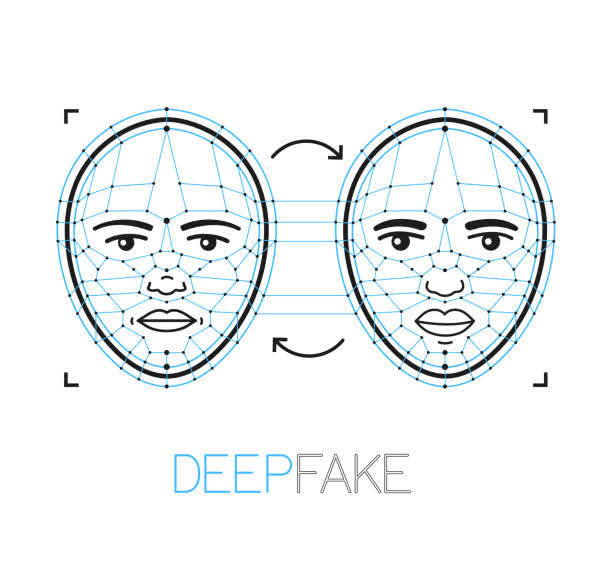
      Deepfakes may also be used to portray NATO personnel on deployment in a misleading light. 

      The result is two direct effects that are critical to the Attackers strategic objectives at a time when,


      (1) Delay political decision-making on military response and deployment as public confidence in the armed forces erodes and politicians dither, giving the attackers time and space to consolidate (also politically) their gains on the ground. 

      (2) Delay military acquisition and any modernization efforts as politicians respond to public opinion that has already been corrupted. 


      A Combination Of Financial Warfare, Economic Targeting, And Influence Operations


      Another significant sector that affects defense and security is economic and business activity, as well as technological innovation. 


      • Patent (IP) management for dual-use technology should be a major defense issue. 
      • Whoever understands the secrets of new game-changing technology first will have strategic advantages that are game-changing (e.g. Quantum Computing and Artificial Intelligence). 

      This isn't only about the future, however. 

      Obtaining majority shareholdings in EU businesses creating and managing cutting-edge dual-use satellite technology that may give the finest assistance available to hypersonic missiles is now a critical actual and conceivable danger to the economic, military, technical, and corporate combination. 

      Such hybrid influence activities should be a top focus for the European Union. 


      Influence operations may not even be primarily targeted at defense companies per se, making them much less visible as hostile actions. 


      Political, military, security, intelligence, and corporate leaders must up their game by confronting the uncomfortable fact that influence operations may not even be primarily targeted at defense companies per se, making them much less visible as hostile actions. 


      • Instead, they go after private sector firms that have nothing to do with the military in principle, such as sophisticated manufacturing, software development and service firms, digital platforms, and, most importantly, the space industry. 


      In terms of opposing Influence Operations, the commercial space sector should become a crucial area that requires special attention. 


      In terms of the space industry's hardware, the cost of launching spacecraft into space is decreasing, allowing nations to use commercial space operations for military purposes. 


      Technologies that are of special interest to enemies, such as the development and deployment of hypersonic vehicles to transport military assets and deploy them swiftly, are a crucial area of military usage. 

      The commercialization of data in space, in particular. 


      Similar to the start of the nuclear weapons era in the mid-1940s, data and its management is the major new geopolitical and military battlefield. 


      In terms of pure military operations, the digital backbone of the armed forces, which stretches from satellites to platoon commanders, guiding missiles and supporting both decision-making and operations, may well start to determine the military balance among the world's great powers in the four domains of land, sea, air, and information. 

      As these private-sector-led technologies increase military capabilities, the race is on to see who can acquire a specific IP first. 

      Despite seeming to be unrelated to the military, this is the primary area in which foreign influence operations must be fought. 


      This is especially true given our military's reliance on the private sector for research, development, and procurement. 

      China and Russia, on the other hand, depend on private-public partnerships and collaboration, with national goals (such as AI, 5G, and Quantum Computing) driving research and development. 


      As a result, protecting our vital intellectual property in the private sector must become a top concern. 

      Our private-sector enterprises are the legal owners of these strategic patents. 

      The issue of who controls these corporations' shareholdings, boards, and management must become a major national security priority. 

      This is because business owners and managers have complete control over who receives their new technology discoveries, whether they are friends or adversaries. 


      For the media, the public, the political establishment, and state institutions, hybrid operations against such corporations (to obtain their IPs) are hardly the stuff of spectacular tales. 


      Furthermore, they are not necessarily takeover activities headed by EU-based and licensed firms with monies already in the EU's banking system, but whose ultimate beneficiaries may be Russian or Chinese, or anybody else. 

      Until 2018, certain Baltic nations were mostly Russian-speaking. These monies are likely still moving in the EU, where they may be readily exploited to purchase enterprises that are strategically helpful to rivals. 

      In other instances, opportunistic or purposeful exploitation and manipulation of Environmental, Social, and Governance (ESG) concerns in publicly traded corporations may be used to compel a change in ownership, board of directors, and management. 


      Areas For Leveraging DeepFakes


      DeepFakes may also be used in such influence operations to fraudulently portray politicians, business leaders, or auditors making remarks that indicate a significantly worse financial status of their company or the standards to which they comply, for example. 


      The speed with which social media may disseminate these DeepFakes before the truth is re-established (if at all), might result in a stock market crash, a bank run (if it is falsely believed to be bankrupt), and eventually civil upheaval. 

      It may cause the implementation of vital technologies and infrastructure that impact economic development and growth, such as 5G, nuclear energy and waste treatment, and vaccinations, to be delayed. 

      Such sponsored enterprises may pose a direct security and defense danger to their proxy non-state actors. 

      Belgium is especially vulnerable: it ranked ninth in the world in terms of patents per million people in 2018, just ahead of Japan. Many EEA countries were also in the top seven. 


      Many businesses have had substantial cash flow challenges as a result of COVID, which provides chances for hostile influence operations to purchase stakes in small and medium-sized technological firms. 


      In Hybrid warfare Influence Operations, defense, security, technology, and the economy are all intertwined, and quick response is critical. 


      Not just in the Cyber realm, but also in the economic sphere, we must quickly establish resilience and the high-quality reaction necessary to cope with influence-induced crises. 


      • Building resilience and crisis management capacities requires a public-private cooperation. 
      • The creation of a trustworthy network within which information may be transmitted in a safe environment is a cornerstone of this collaboration. 
      • The institutional foundation for such an attempt may be an Economic Security and Intelligence capacity that operates this collaboration and assembles a collection of disparate data and information into a cohesive picture of the danger presented by Influence Operations. 
      • To make state institutions take economic influence operations seriously in the same way they take other (more visible) threats seriously, a bureaucratic and business culture shift is required.
      • Meanwhile, business must acknowledge and comprehend that not all market activity is benign, and to trust the state with what they are facing. 


      Citizens, businesses, and the government all have a similar interest in preserving our economy, security, and way of life, thus the moment for such a transition in culture and institutional frameworks is ideal. 


      Influence Operations, much more than cyber per se, pose a serious and direct danger to all three. 


      Our society will suffer catastrophic repercussions if business as usual continues. 


      The only way to defeat hostile Influence Operations is to establish and implement a new mode of operation that depends on cooperation between state institutions and the private sector on the one hand, and between the state and the private sector on the other. 


      The ministries of the economy, finance, and infrastructure must all have a role in national security. 


      • Beyond cyber-attacks, the longer-term concern in Ukraine is precisely this subtle blend of strategic influence operations. 
      • Similar dangers to the EU's economic, technological, and military combination must be assumed, and the EU must respond quickly and aggressively.


      ~ Jai Krishna Ponnappan


      You may also want to read and learn more about Global Geo Politics, Conflicts, And Conflict Resolution here.


      Sources & References:


      • Eberle, J. and Daniel, J., 2022. Anxiety geopolitics: Hybrid warfare, civilisational geopolitics, and the Janus-faced politics of anxiety. Political Geography92, p.102502.
      • Muradov, I., 2022. The Russian hybrid warfare: the cases of Ukraine and Georgia. Defence Studies, pp.1-24.
      • Magnuson, S., Keay, M. and Metcalf, K., 2022. Countering Hybrid Warfare: Mapping Social Contracts to Reinforce Societal Resiliency in Estonia and Beyond (Spring 2022). Texas National Security Review.
      • Панфілов, О. and Савченко, О., 2022. THE SOCIOLOGICAL ASPECT IN THE CONTENT OF THE MODERN HYBRID WARFARE. " Вісник НЮУ імені Ярослава Мудрого". Серія: Філософія, філософія права, політологія, соціологія1(52).
      • Solmaz, T., 2022. ‘Hybrid warfare’: A dramatic example of conceptual stretching. National security and the future23(1), pp.89-102.
      • Bhattacharya, I., 2022. Hybrid Warfare Teasing Security Concerns in Asia. In The Palgrave Handbook of Global Social Problems (pp. 1-15). Cham: Springer International Publishing.
      • Gaiser, L., 2022. Chinese hybrid warfare approach and the logic of strategy. National security and the future23(1), pp.67-77.
      • Andersson, M., 2022. Russia's use of Hybrid Warfare against the European Union 2014-2020: A qualitative content analysis.
      • HOLECZ, J., THE ORIGINAL “HYBRID WARFARE”–PART I1. MILITARY NATIONAL SECURITY SERVICE, p.59.
      • Kennedy, D., 2022. The Gun, the Ship, and the Pen: Warfare, Constitutions, and the Making of the Modern World by Linda Colley. Journal of Interdisciplinary History52(3), pp.430-431.
      • Arild, S., NATIONAL RESILIENCE AS A TOOL TO COUNTER HYBRID THREATS Sunde Arild. У збірнику представлено матеріали ІІ Міжнародної науково-практичної конференції «Управління та адміністрування в умовах протидії гібридним загрозам національній безпеці». Матеріали подано у авторській редакції. Редакційна колегія може не поділяти думок авторів. За достовірність даних та унікальність поданого до друку матеріалу, p.217.
      • Coldea, F., 2022. Intelligence challenges in countering hybrid threats. National security and the future23(1), pp.49-66.
      • Davies, L., 2022. A “hybrid offensive” in the Balkans? Russia and the EU-led Kosovo-Serb negotiations. European Security31(1), pp.1-20.
      • Hook, K. and Marcantonio, R., 2022. Environmental dimensions of conflict and paralyzed responses: the ongoing case of Ukraine and future implications for urban warfare. Small Wars & Insurgencies, pp.1-29.
      • Kurban, O. and Stadnichenko, O., 2022. Hybrid Conflicts in Modern Geopolitics: Based on Russian-Ukrainian Relations From 1991-2021. In Handbook of Research on Ethnic, Racial, and Religious Conflicts and Their Impact on State and Social Security (pp. 70-89). IGI Global.


      Frequently Asked Questions


      1. What is Hybrid Warfare?
        • To put it another way, hybrid warfare is defined as the interaction or fusion of traditional and unconventional weapons of power and subversion. These instruments or methods are synergistically used to exploit an antagonist's weaknesses and create synergistic effects. Hybrid warfare is a military tactic initially advocated by Frank Hoffman that combines political warfare with conventional, irregular, and cyberwarfare, as well as other influencing measures including false news, diplomacy, lawfare, and foreign electoral interference. 
      2. What is an example of the term "hybrid warfare"? 
        • The 2006 confrontation between Israel and Hezbollah is one of the most often cited instances of a hybrid war. Hezbollah is a well-organized non-state force backed by Iran.  While it often works as a mouthpiece for Iran, the organization has its own goal. 
      3. What does NATO mean when it says "hybrid warfare"? 
        • Disinformation, cyber assaults, economic pressure, and the deployment of irregular armed groups, as well as the employment of regular troops, are all examples of hybrid threats. 
      4. What is a GREY war? 
        • Grey zone actions, in general, include pursuing political goals via carefully planned operations; moving gently toward goals rather than achieving definitive outcomes fast; working to stay below critical escalatory thresholds in order to avert conflict; and using all instruments of state power. 
      5. Why is hybrid warfare a national security threat? 
        •  Hybrid warfare employs all aspects of state power to force its will on another state, focusing on the weakest development areas and attaining outcomes. Indeed, this kind of warfare assumes that society becomes the first line of defense. 
      6. What are the dangers that exist in the grey zone? 
        • The end outcome Hybrid threats, sharp power, political warfare, malevolent influence, irregular warfare, and contemporary deterrence are all terms used to describe the gray zone phenomena. The International Security Program at CSIS has looked at these dangers and how the US might effectively discourage, campaign in, and react to gray zone tactics. 
      7. What is cyberwarfare's primary goal? 
        • The purpose of cyberwarfare, according to the Cybersecurity and Infrastructure Security Agency, is to "weaken, disrupt, or destroy" another country. Cyberwarfare programs aim for a broad range of objectives that might hurt national interests in order to accomplish their aims. 
      8. When did hybrid warfare first appear on the scene? 
        • First, in 2005, two US military officers wrote on the "development of hybrid wars," emphasizing the use of both conventional and unconventional strategies, techniques, and tactics in modern combat, as well as psychological and information-related elements of current battles. 
      9. What is non-kinetic warfare, and how does it differ from kinetic warfare? 
        • Non-kinetic Warfare (NKW) is a complete operational concept that is employed in the interlaced, overlapping, and integrated Electromagnetic Spectrum, Information Space, and Cyber Space to allow non-kinetic environment supremacy, according to our definition. 
      10. Is there a distinction between conventional and unconventional warfare? 
        • Unconventional warfare is an effort to win victory indirectly via a proxy army, while conventional warfare is employed to directly diminish the opponent's military capabilities through assaults and maneuvers. 
      11. What is subthreshold warfare, and how does it work? 
        • Sub-threshold warfare, a sort of warfare in which open armed combat is avoided but confrontation is definitely occurring, is arguably a new character on the stage. The Salisbury assaults, Chinese activity along the 9 Dash Line, and western involvement in Iraq and Syria are all examples of this. 
      12. What is the definition of a proxy army? 
        • Non-state proxy armed forces are often defined as irregular military organizations that engage on behalf of a foreign authority in an internal armed conflict, either entirely or partly. Militias, rebels, and "terrorists" are among them. 
      13. What does fifth-generation warfare imply? 
        • Fifth-generation warfare (5GW) is characterized by non-kinetic military actions such as social engineering, deception, and cyberattacks, as well as emerging technology like as artificial intelligence and completely autonomous systems. 
      14. Who came up with the phrase "hybrid warfare"? 
        • Hybrid warfare is a military tactic initially advocated by Frank Hoffman that combines political warfare with conventional, irregular, and cyberwarfare, as well as other influencing measures including false news, diplomacy, lawfare, and foreign electoral interference. 
      15. How can you put a halt to a hybrid war? 
        • Training, drills, and education are all important parts in preparing to deal with hybrid threats. This entails putting decision–making procedures to the test as well as coordinating joint military and non-military responses with other stakeholders.